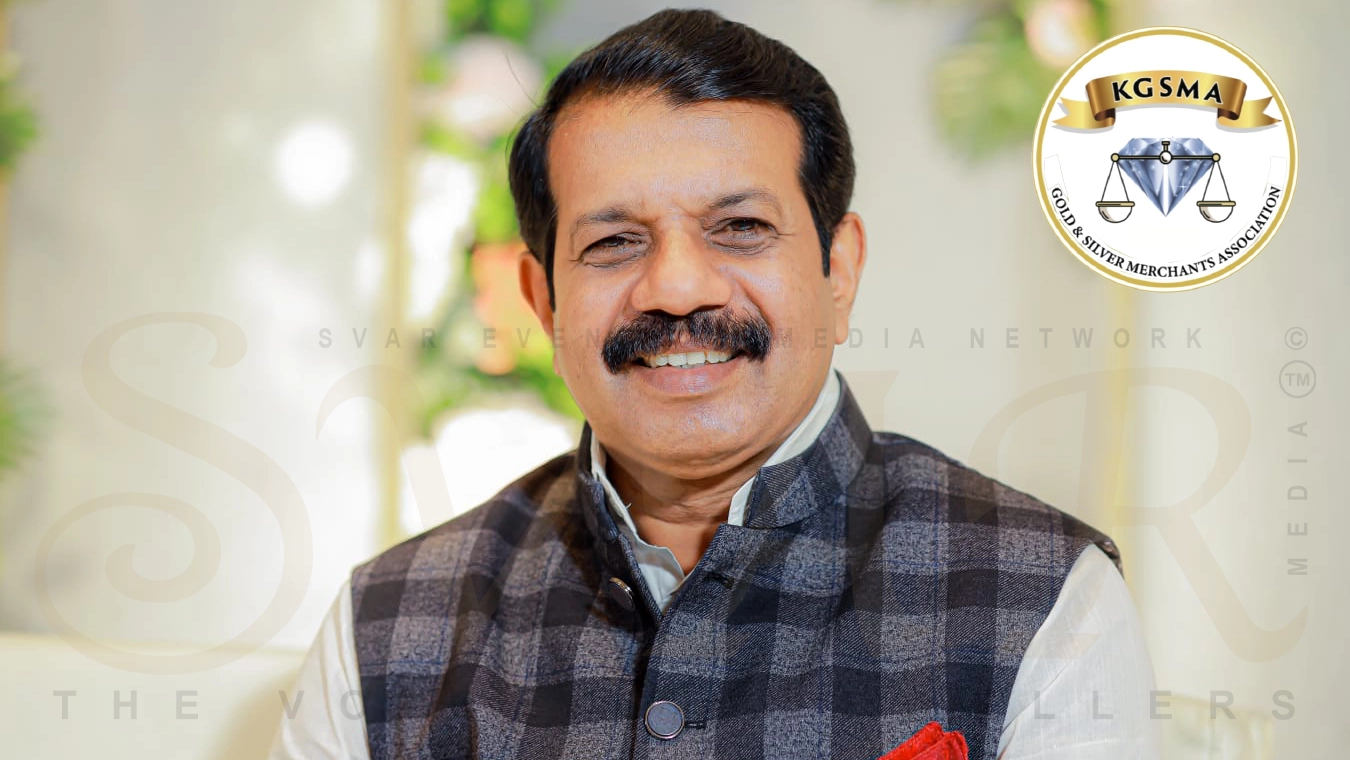
Kerala’s jewellery trade has undergone a remarkable transformation over seven decades, evolving from lower-carat gold and traditional ornaments to 916-purity HUID hallmark jewellery and global fashion designs. On Kerala’s 70th anniversary, Adv. S. Abdul Nazar, State General Secretary of the Kerala Gold and Silver Merchants Association (KGSMA), reflects on the industry’s journey, changing consumer preferences, rising gold prices and its growing contribution to the state’s economy.
Quick Summary
- Kerala’s jewellery trade has evolved significantly over seven decades since the state’s formation in 1956.
- The industry transitioned from restrictive regulations to a more liberalised gold trade.
- Traditional Kerala jewellery designs have expanded to include global fashion collections and lightweight ornaments.
- Gold purity standards progressed from lower-carat jewellery to 22-carat, 916-purity hallmark jewellery with six-digit HUID identification.
- Gold prices increased from approximately ₹90 per 10 grams in 1956 to approximately ₹1,42,100 on October 31, 2026.
- The jewellery sector has become an important contributor to Kerala’s economy, supporting hundreds of thousands of livelihoods.
- Digital technology, Artificial Intelligence and global market opportunities are expected to shape the industry’s future.
Kerala’s Jewellery Trade: Seven Decades of Transformation
Since Kerala was formed on November 1, 1956, the gold trade has evolved alongside the state’s social and economic development. As Kerala completes seven decades, the transformation witnessed by its jewellery sector is truly remarkable.
There was a time when gold jewellery was considered a luxury and a form of savings owned by only a small section of society. Today, gold has become an integral part of the lives of ordinary Keralites, playing an important role in weddings, celebrations, savings and investments. The journey from an era when gold was accessible to only a few to the emergence of Kerala as a major jewellery-consuming market is a remarkable story spanning seven decades.
From an Era of Restrictions to a Liberalised Trade
The gold trade of the 1960s was far more complicated than it is today. The manufacture and sale of lower-carat jewellery, including 14-carat gold ornaments, were subject to stringent Central Excise regulations and complex legal procedures. The system, widely known as the ‘Excise Raj’, posed significant challenges to traders. Several restrictions governed the possession, manufacture, distribution and sale of gold.
Over time, many of these restrictions were removed, paving the way for a more liberalised gold trade. This encouraged thousands of new entrepreneurs to enter the sector. It also facilitated the transformation of traditional small jewellery shops into modern showrooms. This was a significant turning point in the commercial history of Kerala.
A Revolution in Jewellery Designs
At one time, traditional Kerala jewellery designs dominated the market. However, with changing generations and evolving preferences, significant transformations took place in the design and manufacturing of ornaments.
The jewellery market gradually evolved from royal traditional designs to world-class fashion collections, and from heavy ornaments to lightweight jewellery.
Today, international fashion trends, modern technology, innovative designs, machine-based manufacturing and precision finishing have become integral parts of Kerala’s jewellery industry.
From Lower-Carat Gold to 916 HUID Standards
The last seven decades have witnessed remarkable progress in the purity and quality standards of gold.
The trade has evolved from lower-carat jewellery to 22-carat, 916-purity hallmark jewellery, supported by the six-digit HUID identification system.
Hallmarking has played a crucial role in strengthening consumer confidence and ensuring transparency. Today, consumers have better mechanisms to identify the purity of gold jewellery and verify its authenticity.
An Unprecedented Rise in Gold Prices Over Seven Decades
The Value of Gold Has Multiplied Thousands of Times!
One of the most remarkable chapters in Kerala’s 70-year gold trade history is the unprecedented increase in gold prices. Compared with the price appreciation of many other products, the rise in gold prices over these seven decades has been extraordinary.
In 1956, the price of 10 grams of gold was approximately ₹90. According to the market rate on October 31, 2026, the price of 10 grams of 24-carat gold in Kerala is approximately ₹1,42,100.
This means that the price of gold has increased approximately 1,566 times over seven decades. The purchasing power of money has changed so dramatically that an amount sufficient to buy 10 grams of gold in 1956 would not even buy one-hundredth of a gram at today’s prices.
Global economic conditions, the strength of the US dollar, the foreign exchange rate of the Indian rupee, inflation, central bank gold reserves and geopolitical tensions have all continuously influenced gold prices.
Despite this extraordinary increase in prices, Keralites’ interest in gold has never diminished. Instead, purchasing patterns, jewellery weights and designs have evolved in line with consumers’ purchasing power and changing preferences. The rising price of gold has also been an important factor behind the shift from heavy ornaments to lightweight jewellery.
Consumers who once viewed gold primarily as jewellery now increasingly consider it an important part of their savings, financial security and investment portfolios.
A Strong Presence in Kerala’s Economy
What began as a small-scale family business has today developed into a vast economic network connected with manufacturing, wholesale trade, retail, jewellery designing, skilled workers, artisans, transportation and banking.
The sector supports the livelihoods of hundreds of thousands of people.
Jewellery establishments are now actively operating in every district, town and village across Kerala.
As designs and technologies from different parts of the world reach the Kerala market, the state’s jewellery trade is also establishing a significant presence on the global stage.
Seven Decades Behind Us, A New Future Ahead
The industry has witnessed an era of restrictions, tax reforms, technological advancements and changing consumer preferences. It has navigated historic fluctuations in gold prices, overcome challenges and continuously explored new opportunities.
In Kerala’s 70-year history, the gold trade has carved out its own golden chapter. Behind this growth are generations of dedicated jewellers, goldsmiths, skilled artisans, employees and loyal consumers who have contributed to the industry’s development.
The next goal is to build the jewellery trade of the future for the coming generations. Through digital technology, Artificial Intelligence, global market opportunities, modern accounting systems and transparent business practices, the sector must move towards a stronger and more sustainable future.
As Kerala celebrates its 70th anniversary, we can proudly say:
- From lower-carat gold to 916 HUID purity…
- From traditional ornaments to global fashion…
- From small-scale businesses to a market recognised across the world…
- From ₹90 to over ₹1.42 lakh — a historic transformation in the price of gold…
Through seven decades of remarkable transformation, Kerala’s gold trade has continued to grow and evolve.
Heartfelt greetings to every trader, employee, worker and consumer who has been part of this golden journey!
Happy Kerala Piravi!
Salutations to Kerala’s Golden Heritage!
Adv. S. Abdul Nazar
State General Secretary
Kerala Gold and Silver Merchants Association (KGSMA)
FAQs
How has Kerala’s jewellery trade evolved over the last 70 years?
Kerala’s jewellery trade has transformed from a largely traditional and restricted market into a modern industry featuring advanced manufacturing, global designs, lightweight jewellery and organised showrooms.
What changes took place in gold purity standards in Kerala?
The trade evolved from lower-carat jewellery to 22-carat, 916-purity hallmark jewellery supported by the six-digit HUID identification system.
What was the price of 10 grams of gold in Kerala in 1956?
The price of 10 grams of gold was approximately ₹90 in 1956.
What was the gold price in Kerala on October 31, 2026?
According to the figures mentioned in Adv. S. Abdul Nazar’s statement, 10 grams of 24-carat gold was approximately ₹1,42,100.
How has jewellery design changed in Kerala?
The market has evolved from traditional Kerala and heavy jewellery designs to lightweight ornaments, international fashion collections and modern precision-finished jewellery.
What role does the jewellery industry play in Kerala’s economy?
The industry supports manufacturing, wholesale and retail trade, jewellery designing, artisans, skilled workers, transportation and banking, providing livelihoods to hundreds of thousands of people.
What is the future outlook for Kerala’s jewellery industry?
The industry is expected to advance through digital technology, Artificial Intelligence, global market opportunities, modern accounting systems and transparent business practices.
Source: SVAR Media Network
About SVAR Media Network – India’s Best Source for Jewellery News, Magazines, Newsletters and Media
SVAR Media Network is India’s No. 1 Destination for Jewellery News, setting the gold standard in timely, trusted, & trend-driven coverage across the Gems & Jewellery industry. As the Most Followed Jewellery Magazine & Media House in India, SVAR delivers Daily Jewellery News India Updates, market insights, & global developments through its platforms like Jewellery Magazine, Newsletters, AI Powered News Bulletins, Website, Social Media, Podcasts, & much more.
Recognized as Asia’s one of the Best Media in Jewellery & one of the World’s Best Jewellery Media, SVAR Media Network sets Unparalleled Standards in the Gems & Jewellery industry. SVAR is the Most Trusted & Widely Read Voice in the Gems & Jewellery Community.
Renowned as India’s Best Jewellery Magazine & Leading Jewellery Media, SVAR blends legacy with cutting-edge innovation by delivering:
- Best in class Jewellery Magazine for the Gems & Jewellery Industry & Jewellery Enthusiasts
- Real-time AI-Powered Jewellery News via SVARA AI, the World’s First AI Anchor in Fashion, Gems & Jewellery Industry
- India’s One of the First Gems & Jewellery Podcasts
- Digital Jewellery Newsletters for professionals and enthusiasts
- ISO 9001:2015 Certification, the first in the jewellery-media sector, proving our commitment to excellence
- Asia’s First & World’s Second Meta Verified Jewellery Media Brand

Ranked #1 among the Top 5 Gems & Jewellery News Websites, Top 10 Jewellery Magazines in India, & Most Influential Jewellery Media Brands, SVAR Media Network is your Trusted Source for Accurate, Fast, & Future-Focused Jewellery News.
SVAR Media Network is India’s No 1 Digital Media in Jewellery Industry & continues to be the Leading Jewellery Magazine & a Global Leader in Jewellery Media. SVAR Media Network offers a diverse range of services, including: Monthly Magazines, Digital Newsletters, Al-Driven News Bulletins, Social Media Promotions, Website Blogs & Articles, WhatsApp Updates, Podcasts & more…
Whether you seek updates on New Launches, Trade Shows, Celebrity Campaigns, Trends or Market Movements, SVAR is the Authority in Jewellery News India & beyond.
Explore the World of Gems & Jewellery with SVAR Media Network — Your Best Source for Trusted, Trend-Setting Jewellery News & Media, Updates, Podcasts & more…