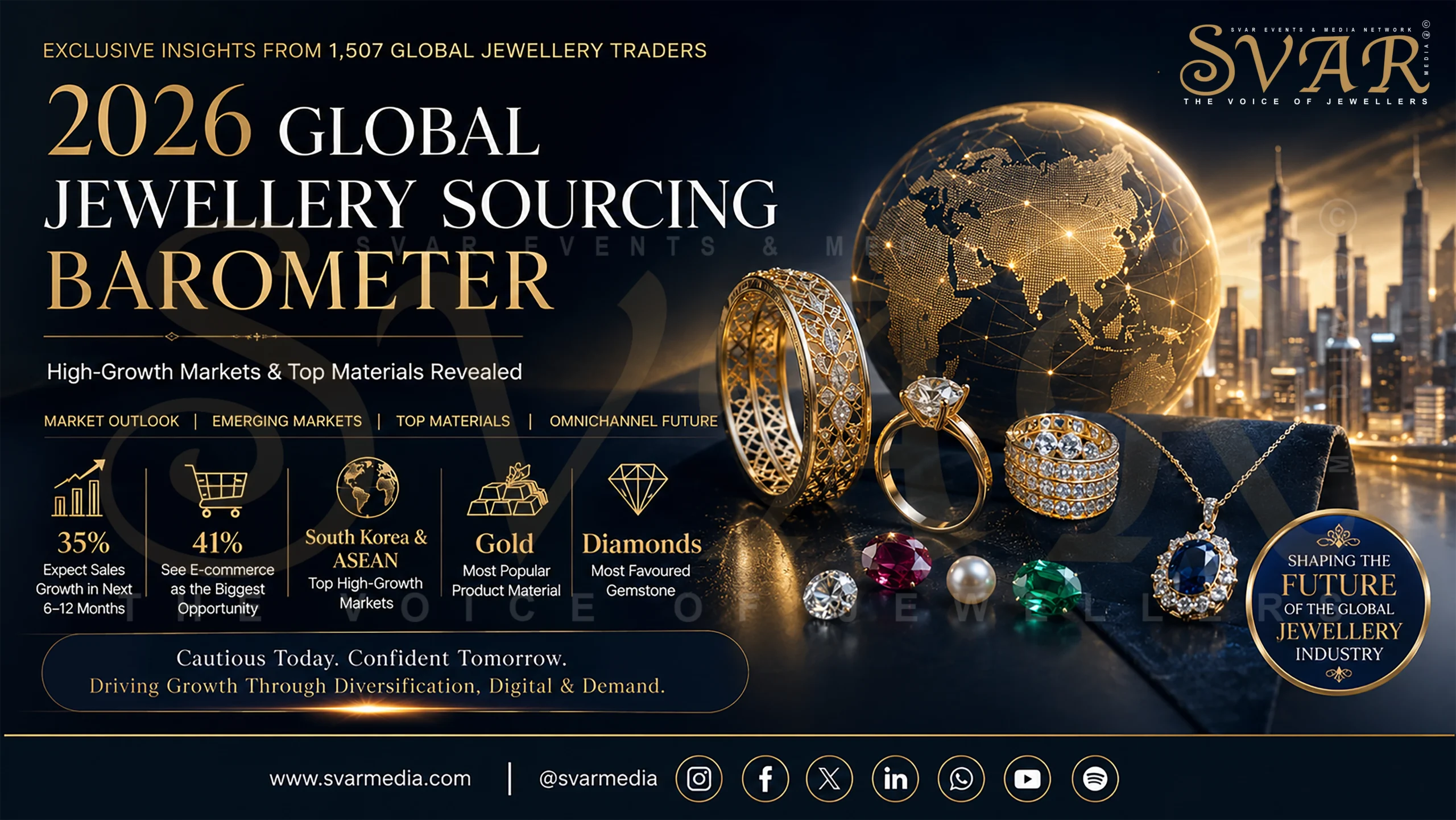
The global jewellery industry is entering 2026 with cautious optimism, according to the latest HKTDC Global Jewellery Sourcing Barometer. While macroeconomic uncertainty, inflation, and exchange-rate volatility continue to challenge businesses, jewellery traders are increasingly turning towards e-commerce, omnichannel retail, strategic diversification, and emerging markets to drive future growth. The survey findings also reveal rising demand for stylish fashion jewellery, sustained strength in gold, and evolving gemstone preferences influenced by lab-grown alternatives.
Quick Summary
- 1,507 jewellery buyers and exhibitors participated in the HKTDC survey.
- 44% of respondents expect sales growth over the next 12-24 months.
- E-commerce emerged as the biggest business opportunity for 2026.
- South Korea and ASEAN are considered the most promising jewellery markets.
- Stylish fashion jewellery remains the fastest-growing product segment.
- Gold continues to dominate as the most preferred jewellery material.
- Diamonds remain the top gemstone, but rubies and pearls are gaining popularity.
- Omnichannel retailing is becoming increasingly important in jewellery sourcing and sales.
- Rising inflation, exchange-rate volatility, and global economic uncertainty remain key challenges.
- Lab-grown alternatives are influencing gemstone purchasing preferences.
2026 Global Jewellery Sourcing Barometer: High-Growth Markets & Top Materials Revealed
Industry Sentiment Towards the Global Jewellery Market
To gauge sentiment towards the global jewellery market, a HKTDC survey was conducted among 1,507 of the jewellery buyers and exhibitors attending the leading industry events, namely the Hong Kong International Jewellery Show and the Hong Kong International Diamond, Gem & Pearl Show, in early March this year in Hong Kong.
Overall, many jewellery traders were somewhat cautious as to their 2026 prospects. It was acknowledged that the resilience of the jewellery industry was largely down to its facility for strategic diversification.
This article will present detailed survey findings for jewellery industry players’ better strategic positioning.
How Confident Are Jewellery Traders On the Market Outlook?
Moderate optimism over the next one to two years was observed of the 1,507 traders surveyed, among which 35% anticipated sales growth over the next 6-12 months, while 58% believed their sales level would remain unchanged. Over the next one to two years, meanwhile, 44% of respondents expected an uptick in sales, while 49% anticipated their current level would be maintained.
In general, while traders are cautious about their near-term prospects, they appear confident of gradual expansion over the medium term.
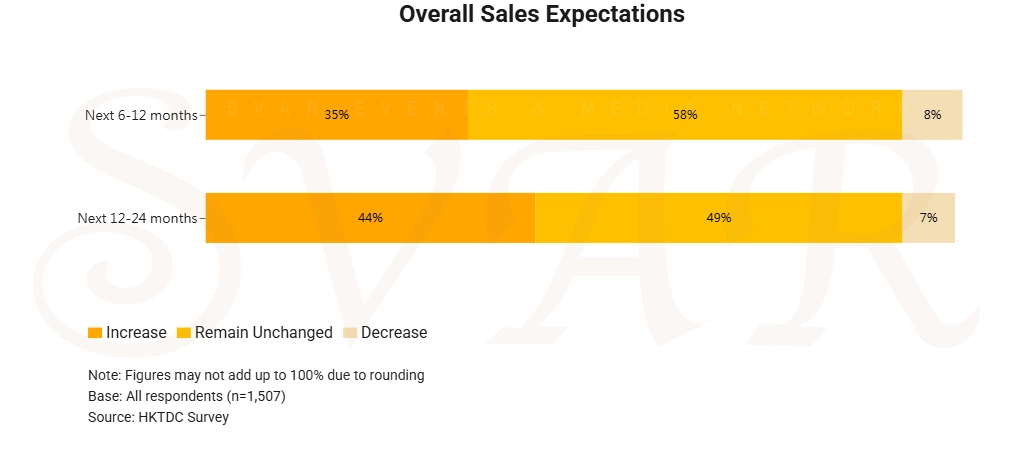
Overall Sales Expectations
| Time Period | Increase | Remain Unchanged | Decrease |
|---|---|---|---|
| Next 6-12 Months | 35% | 58% | 8% |
| Next 12-24 Months | 44% | 49% | 7% |
Opportunities and Challenges Co-Exist for the Global Jewellery Industry
A number of macroeconomic uncertainties look set to adversely impact 2026 jewellery sales, with more than half of all respondents seeing fluctuations in the global economy as a primary business concern. Among the other challenges highlighted were exchange-rate volatility (37%) and inflationary pressures (34%), both of which were seen as likely to complicate business planning and implementation.
Amid these challenges, however, many traders have identified distinct opportunities. Deemed to have the highest potential is e-commerce, which was cited by 41% of respondents. This was followed by rising demand in many of the emerging markets (35%), while about a third of all respondents had faith in recovering consumer purchasing power.
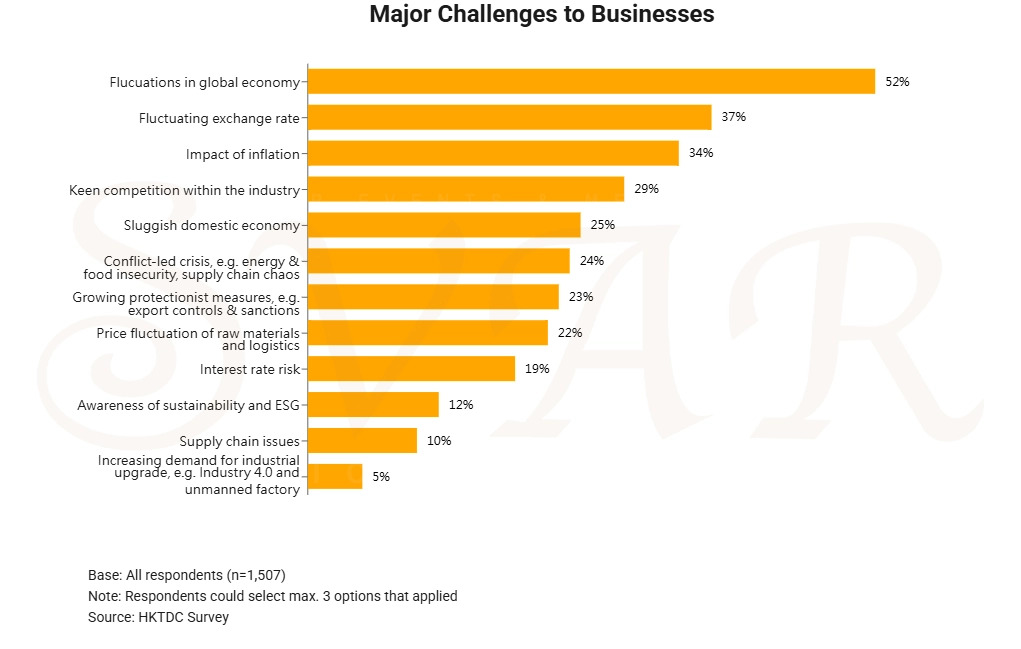
Major Business Challenges
| Challenge | Percentage |
| Fluctuations in global economy | 52% |
| Fluctuating exchange rate | 37% |
| Impact of inflation | 34% |
| Keen competition within the industry | 29% |
| Sluggish domestic economy | 25% |
| Conflict-led crisis | 24% |
| Growing protectionist measures | 23% |
| Price fluctuation of raw materials and logistics | 22% |
| Interest rate risk | 19% |
| Awareness of sustainability and ESG | 12% |
| Supply chain issues | 10% |
| Industrial upgrade demand | 5% |
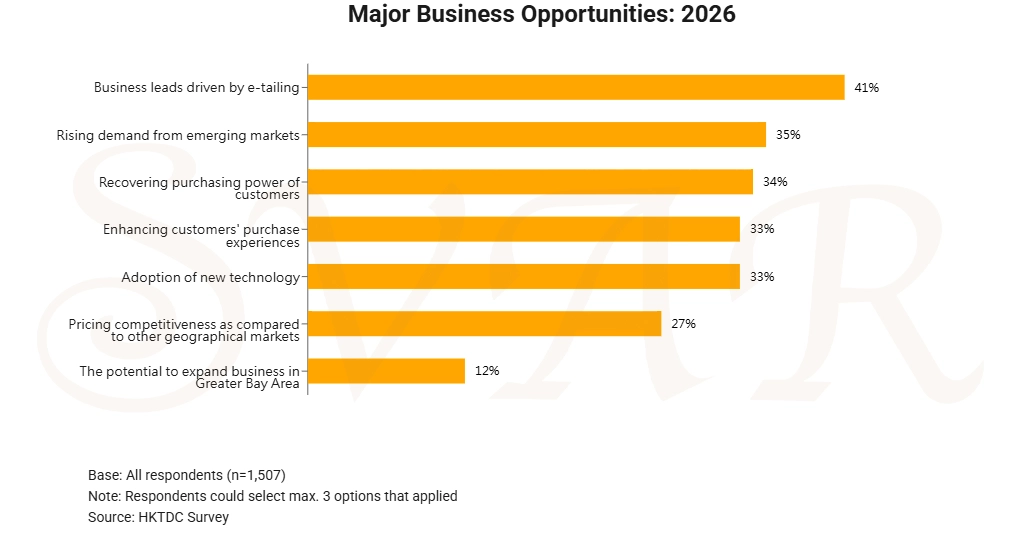
Major Business Opportunities in 2026
| Opportunity | Percentage |
| Business leads driven by e-tailing | 41% |
| Rising demand from emerging markets | 35% |
| Recovering purchasing power of customers | 34% |
| Enhancing customer purchase experiences | 33% |
| Adoption of new technology | 33% |
| Pricing competitiveness | 27% |
| Expansion in Greater Bay Area | 12% |
What Jewellery Product Categories Are Expected to Grow?
Stylish Fashion Jewellery Lead the Game
As with the past two years, stylish fashion jewellery and precious jewellery are the two segments seen as having the greatest growth potential (57% and 35%, respectively). Demand is strong for affordable, stylish items suitable for daily wear, which offer opportunities for self-expression and targeted consumer appeal.
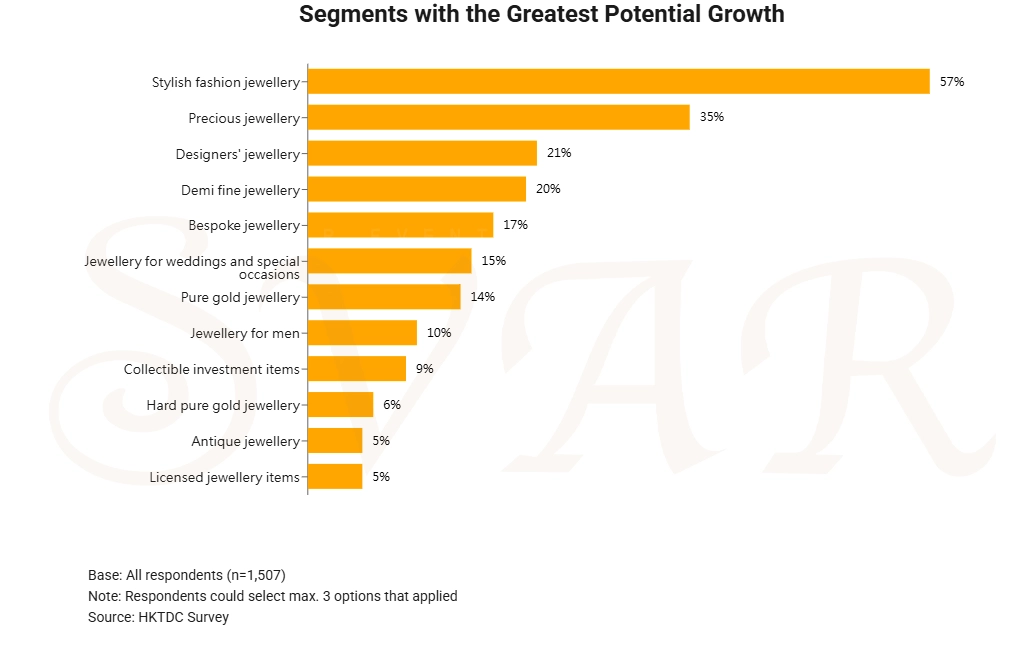
Segments with the Greatest Potential Growth
| Jewellery Segment | Percentage |
| Stylish fashion jewellery | 57% |
| Precious jewellery | 35% |
| Designers’ jewellery | 21% |
| Demi fine jewellery | 20% |
| Bespoke jewellery | 17% |
| Jewellery for weddings and special occasions | 15% |
| Pure gold jewellery | 14% |
| Jewellery for men | 10% |
| Collectible investment items | 9% |
| Hard pure gold jewellery | 6% |
| Antique jewellery | 5% |
| Licensed jewellery items | 5% |
Gold Remains Most Popular Product Material
In terms of the most in-demand precious metals, gold remains the most sought-after, with karat yellow gold, karat white gold and 24K gold heading the category. Despite ongoing price volatility, demand for gold remains substantial, largely because of its high retention of value and familiarity as a safe-haven asset. In line with this, the survey findings suggest higher prices have not diminished the appeal of gold and may, actually, have enhanced its structural investment values.
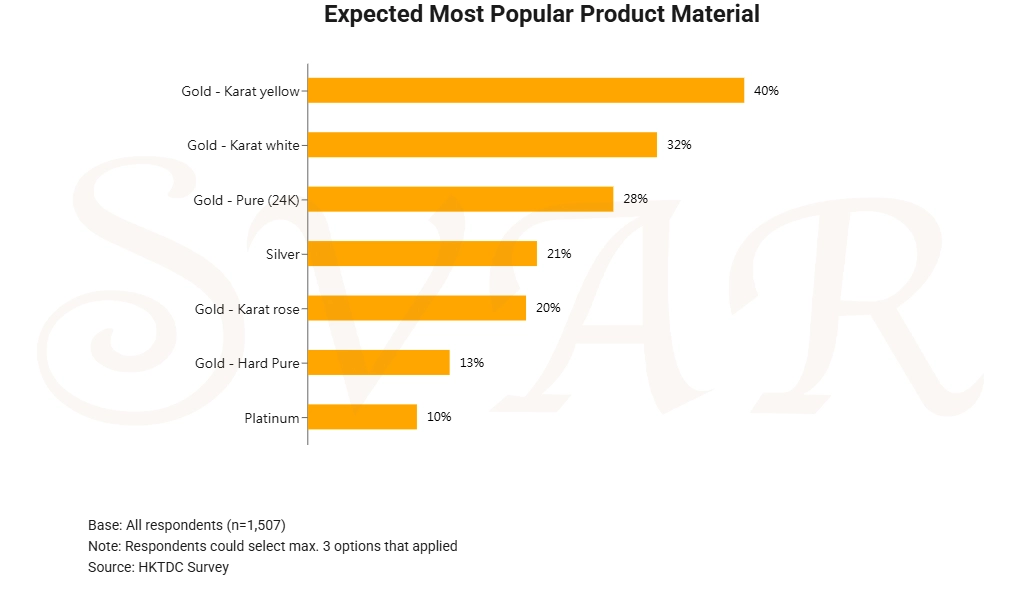
Expected Most Popular Product Material
| Material | Percentage |
| Gold – Karat yellow | 40% |
| Gold – Karat white | 32% |
| Gold – Pure (24K) | 28% |
| Silver | 21% |
| Gold – Karat rose | 20% |
| Gold – Hard Pure | 13% |
| Platinum | 10% |
Favoured Gemstones Revealed
In the case of gemstones, preferences are less straightforward and more fluid. While diamonds remain the most favoured gemstones at 29%, rubies (25%) and pearls (20%) are not far behind. The relatively close spread across the three most popular gemstones can be taken as a sign of evolving consumer preferences, partly on account of the natural diamond market being under pressure from the rise of lab-grown alternatives.
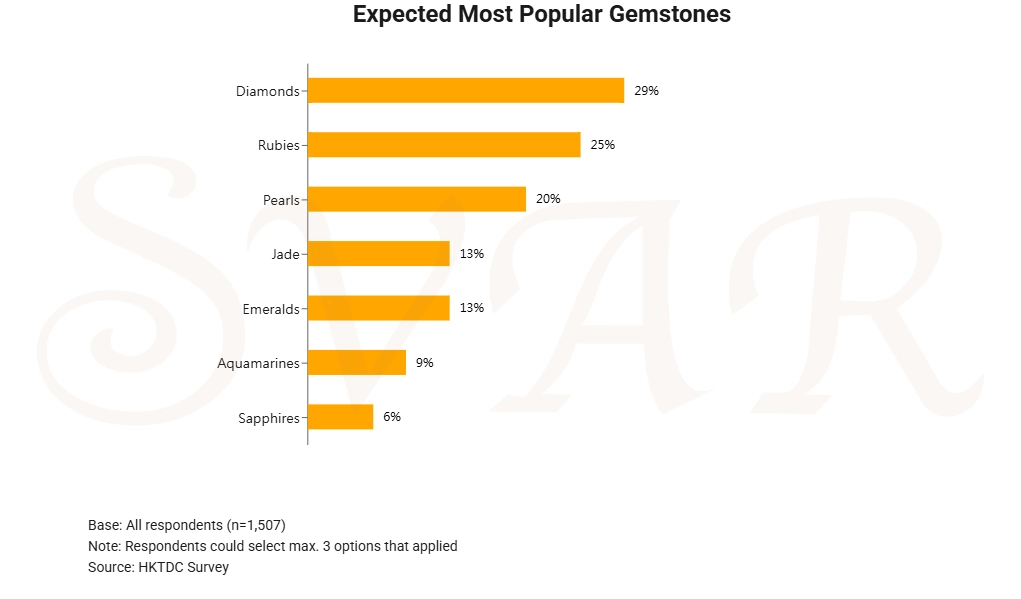
Expected Most Popular Gemstones
| Gemstone | Percentage |
| Diamonds | 29% |
| Rubies | 25% |
| Pearls | 20% |
| Jade | 13% |
| Emeralds | 13% |
| Aquamarines | 9% |
| Sapphires | 6% |
How Will the Jewellery Industry Transform in the Near Future?
Emerging Markets Take the Spotlight
When asked about the opportunities arising within the jewellery industry, it was anticipated that rebound in confidence would be fuelled by increased demand from a number of emerging markets. Specifically, South Korea (73.2%) and ASEAN (71.8%) were picked by over 70% of survey respondents as the most promising jewellery markets over the next two years. This was closely followed by the Chinese Mainland (68.5%), Taiwan (65.3%) and Australia (64.1%), all of which are key destinations for jewellery traders to explore.
Most Promising Jewellery Markets
| Market | Percentage |
| South Korea | 73.2% |
| ASEAN | 71.8% |
| Chinese Mainland | 68.5% |
| Taiwan | 65.3% |
| Australia | 64.1% |
The Omnichannel Pivot
Within the jewellery sector, physical stores continue to be the primary channels in terms of both selling and sourcing, with 53% of respondents favouring such purchase routes. This is, perhaps, not surprising given that product aesthetics, craftsmanship and fit play decisive roles in jewellery purchases.
Despite this, there are signs that the omnichannel option is gaining traction, with 39% of respondents indicating they now favour a more hybrid approach amid global digitalization.
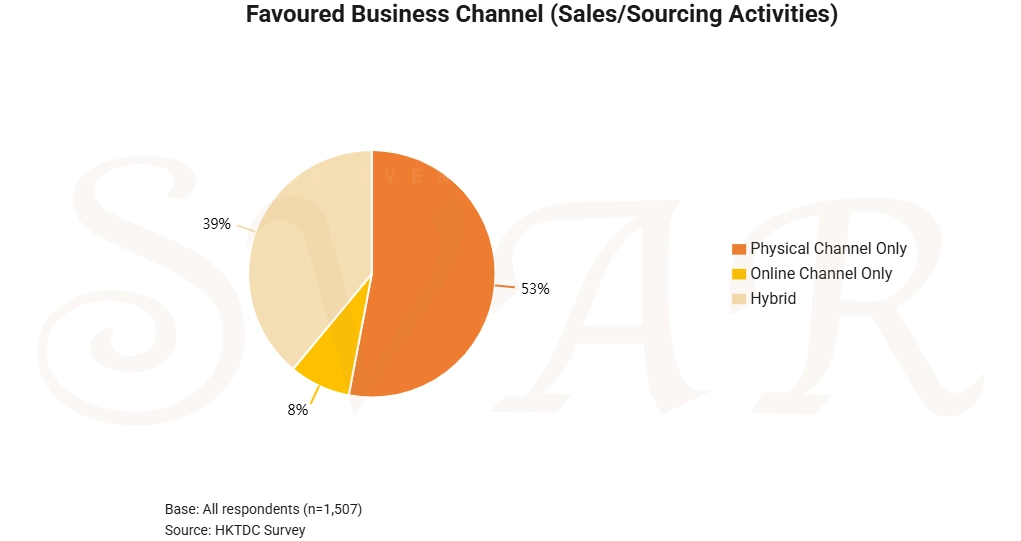
Favoured Business Channel
| Channel | Percentage |
| Physical Channel Only | 53% |
| Online Channel Only | 8% |
| Hybrid | 39% |
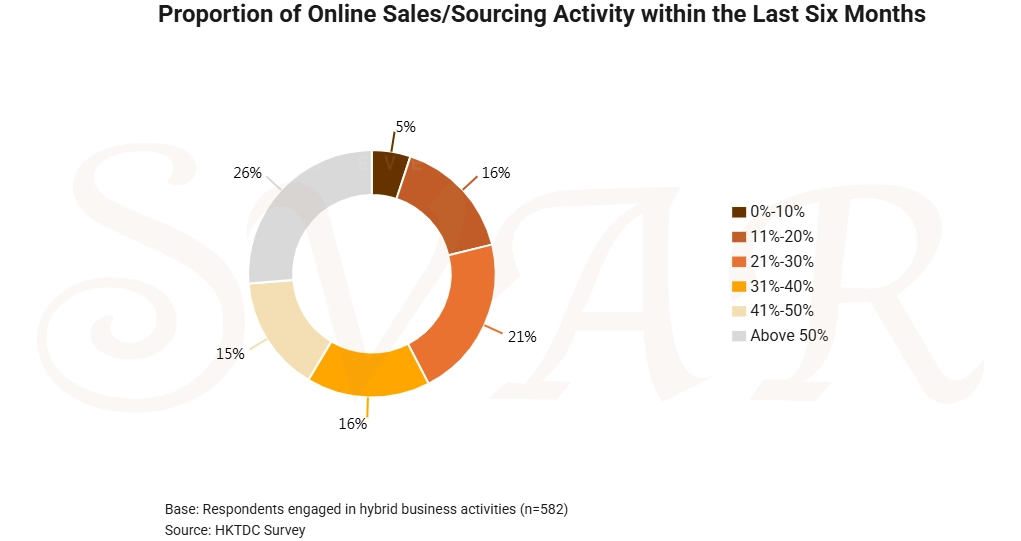
Online Sales/Sourcing Activity Within Last Six Months
| Online Activity Share | Percentage |
| 0%-10% | 5% |
| 11%-20% | 16% |
| 21%-30% | 21% |
| 31%-40% | 16% |
| 41%-50% | 15% |
| Above 50% | 26% |
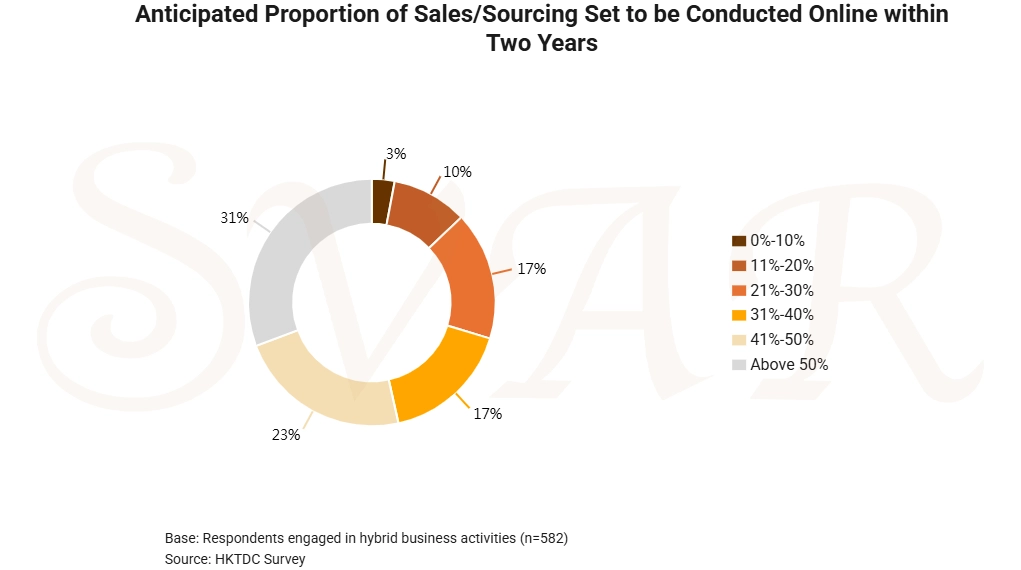
Anticipated Online Sales/Sourcing Within Two Years
| Online Activity Share | Percentage |
| 0%-10% | 3% |
| 11%-20% | 10% |
| 21%-30% | 17% |
| 31%-40% | 17% |
| 41%-50% | 23% |
| Above 50% | 31% |
Moderate Optimism Over the Next One to Two Years
Drilling down into the findings, of the 1,507 traders surveyed, 35% anticipated sales growth over the next six-12 months, while 58% believed their sales level would remain unchanged. Over the next one to two years, meanwhile, 44% of respondents expected an uptick in sales, while 49% anticipated their current level would be maintained. In general, while traders are cautious about their near-term prospects, they appear confident of gradual expansion over the medium term.
It was also clear that rising raw material costs are continuing to shape pricing expectations across the jewellery value chain. As an indication of this, more than half of the total number of respondents – 55% of exhibitors and 53% of buyers – anticipated higher production and sourcing costs on account of persistent upstream pressures. In addition, 46% of exhibitors expected FOB selling prices to increase, while 41% saw FOB selling prices as likely to remain unchanged. In the case of buyers, while 48% believed retail prices were likely to rise, a further 48% expected no change. This can be taken as showing that both exhibitors and buyers expect that not all of their increased costs can be passed onto their customer base.
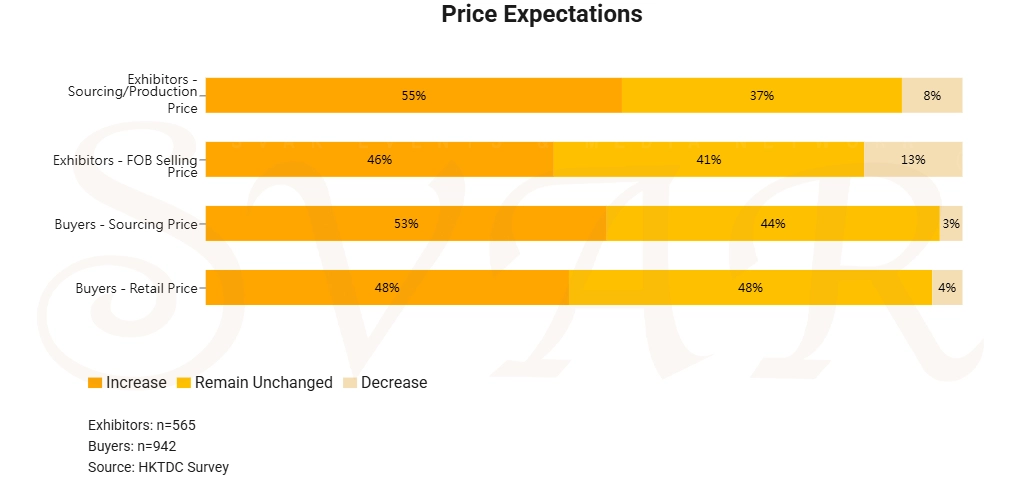
Price Expectations
| Category | Increase | Remain Unchanged | Decrease |
| Exhibitors – Sourcing/Production Price | 55% | 37% | 8% |
| Exhibitors – FOB Selling Price | 46% | 41% | 13% |
| Buyers – Sourcing Price | 53% | 44% | 3% |
| Buyers – Retail Price | 48% | 48% | 4% |
Compared to 2025, in response to the pressures of higher costs and increased competition, 51% of buyers anticipated a rise in their sourcing budget, while 50% had plans in place to expand their product range. In terms of sourcing, more than half of all buyers expected related quantities and frequency to remain unchanged. Although many buyers are not planning to significantly increase their purchase quantities, they are likely to allocate higher budgets and adopt a more selective sourcing strategy in order to widen their product mix and meet increasingly diverse consumer preferences.
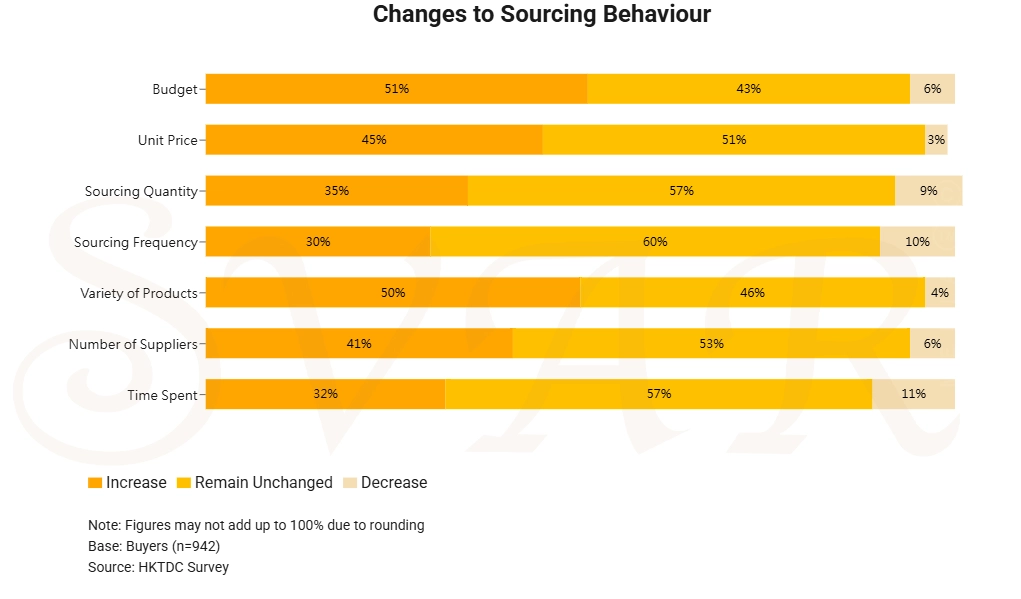
Changes to Sourcing Behaviour
| Behaviour | Increase | Remain Unchanged | Decrease |
| Budget | 51% | 43% | 6% |
| Unit Price | 45% | 51% | 3% |
| Sourcing Quantity | 35% | 57% | 9% |
| Sourcing Frequency | 30% | 60% | 10% |
| Variety of Products | 50% | 46% | 4% |
| Number of Suppliers | 41% | 53% | 6% |
| Time Spent | 32% | 57% | 11% |
Profile of Respondents
565 exhibitors and 942 buyers – 32% from Hong Kong, 49% from elsewhere in Asia and 19% from the rest of the world.
The Hong Kong International Jewellery Show 2026 took place from 4-8 March at the Hong Kong Convention and Exhibition Centre, while the Hong Kong International Diamond, Gem & Pearl Show 2026 took place from 2-6 March at AsiaWorld Expo.
FAQs
What is the 2026 Global Jewellery Sourcing Barometer?
The 2026 Global Jewellery Sourcing Barometer is an HKTDC industry survey conducted among jewellery buyers and exhibitors attending major Hong Kong jewellery trade shows.
How many respondents participated in the survey?
A total of 1,507 jewellery buyers and exhibitors participated in the survey.
Which jewellery segment is expected to grow the most?
Stylish fashion jewellery was identified as the segment with the greatest growth potential at 57%.
Which precious metal remains most popular?
Gold remains the most preferred precious metal, especially karat yellow gold, karat white gold, and 24K gold.
Which gemstones are currently most in demand?
Diamonds remain the most favoured gemstones, followed closely by rubies and pearls.
Which regions are expected to drive jewellery demand growth?
South Korea, ASEAN countries, Chinese Mainland, Taiwan, and Australia are expected to drive significant jewellery demand growth.
What are the biggest challenges facing the jewellery industry in 2026?
Global economic fluctuations, exchange-rate volatility, inflation, and rising raw material costs are among the key challenges.
Why is omnichannel retail becoming important in jewellery?
Consumers increasingly expect both physical and digital shopping experiences, including online browsing, virtual try-ons, and livestream commerce.
How are lab-grown diamonds impacting the market?
Lab-grown alternatives are influencing consumer preferences and encouraging buyers to consider more affordable synthetic gemstone options.
What role does e-commerce play in jewellery growth?
E-commerce was identified as the top business opportunity, with many respondents expecting more than half of their business activities to move online within two years.
Source: SVAR Media Network
About SVAR Media Network – India’s Best Source for Jewellery News, Magazines, Newsletters and Media
SVAR Media Network is India’s No. 1 Destination for Jewellery News, setting the gold standard in timely, trusted, & trend-driven coverage across the Gems & Jewellery industry. As the Most Followed Jewellery Magazine & Media House in India, SVAR delivers Daily Jewellery News India Updates, market insights, & global developments through its platforms like Jewellery Magazine, Newsletters, AI Powered News Bulletins, Website, Social Media, Podcasts, & much more.
Recognized as Asia’s one of the Best Media in Jewellery & one of the World’s Best Jewellery Media, SVAR Media Network sets Unparalleled Standards in the Gems & Jewellery industry. SVAR is the Most Trusted & Widely Read Voice in the Gems & Jewellery Community.
Renowned as India’s Best Jewellery Magazine & Leading Jewellery Media, SVAR blends legacy with cutting-edge innovation by delivering:
- Best in class Jewellery Magazine for the Gems & Jewellery Industry & Jewellery Enthusiasts
- Real-time AI-Powered Jewellery News via SVARA AI, the World’s First AI Anchor in Fashion, Gems & Jewellery Industry
- India’s One of the First Gems & Jewellery Podcasts
- Digital Jewellery Newsletters for professionals and enthusiasts
- ISO 9001:2015 Certification, the first in the jewellery-media sector, proving our commitment to excellence
- Asia’s First & World’s Second Meta Verified Jewellery Media Brand

Ranked #1 among the Top 5 Gems & Jewellery News Websites, Top 10 Jewellery Magazines in India, & Most Influential Jewellery Media Brands, SVAR Media Network is your Trusted Source for Accurate, Fast, & Future-Focused Jewellery News.
SVAR Media Network is India’s No 1 Digital Media in Jewellery Industry & continues to be the Leading Jewellery Magazine & a Global Leader in Jewellery Media. SVAR Media Network offers a diverse range of services, including: Monthly Magazines, Digital Newsletters, Al-Driven News Bulletins, Social Media Promotions, Website Blogs & Articles, WhatsApp Updates, Podcasts & more…
Whether you seek updates on New Launches, Trade Shows, Celebrity Campaigns, Trends or Market Movements, SVAR is the Authority in Jewellery News India & beyond.
Explore the World of Gems & Jewellery with SVAR Media Network — Your Best Source for Trusted, Trend-Setting Jewellery News & Mediapp Updates, Podcasts & more…