

The Return of the Vintage: Pezzottaite
There is an undying allure in vintage gems, and over the last few years, jewellers and collectors have been rediscovering stones that, once upon a time, sat jejune and untold in the margins of the history of gems. One of them is Pezzottaite, a captivatingly rare gemstone which is so captivating that it is commonly confused with its cousin, Morganite. Sold in its scarce, juicy raspberry target colours, Pezzottaite is gradually carving a place for itself in the realm of fine jewellery. Its rediscovery is a reminder that there remains endless treasure to be found in the world, and that some of the most fascinating gems are those with the shortest, the most enigmatic pasts.
What is Pezzottaite?
Pezzottaite, also known as “Raspberry Beryl”, is an extremely rare beryl which was first recognised in Madagascar in 2003. Pezzottaite (Dr. Federico Pezzotta was one of the type-locality discoverers) features deep pink to raspberry-red colour – a unique colour that sets it apart from other beryls such as Morganite (light pink) and Red Beryl (Bixbite).
Pezzottaite, unlike the other beryls, is enriched with both caesium and lithium and, most importantly, is coloured because of it, thus being easily distinguished mineralogically. Its natural beauty, rarity and resonance have established it as a gemstone coveted by collectors; its availability, however, is exceedingly limited.
Why is Pezzottaite Considered Vintage?
The tag of “vintage” attached to Pezzottaite does not have to do with age-old tradition, but scarcity, and an accelerated depletion of resources since the mineral was first found. Madagascar’s principal deposit was soon depleted, and though some material was subsequently discovered in Afghanistan, the supply is still very limited.
For jewellery enthusiasts, the rarity of pezzottaite has brought the stone onto the same list as other “vintage” gemstones: its existence is connected to a very specific geological time and place, and to own a piece of pezzottaite is to own a chapter in gemological history that may never be replicated.
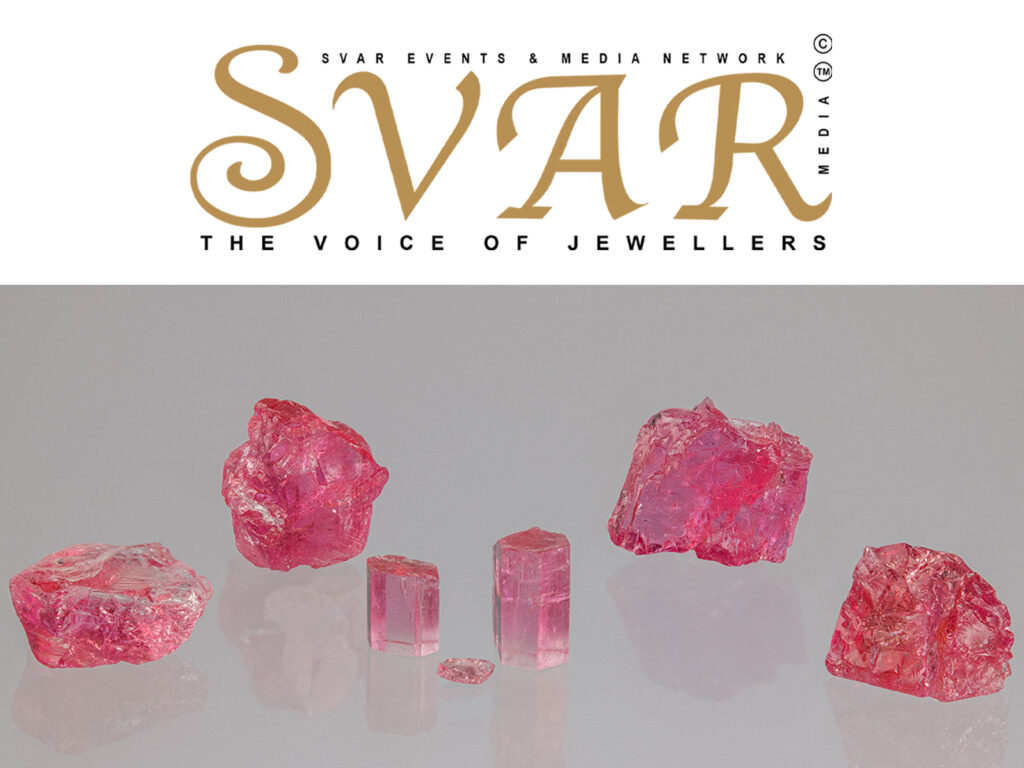
Unique Qualities of Pezzottaite
- Colour: Raspberry pink to purplish-red, generally more vivid than Morganite.
- Rarity: Gem-quality supplies are scarce, with only a few discovered globally.
- Durability: It’s fairly durable with a hardness of 8 on the Mohs scale, excellent for use in jewellery, but can be vulnerable to cleavage and fracturing.
- Value: Readily available: Not so much — mainly in demand due to its rarity, especially among collectors who covet gems outside the diamond-ruby-sapphire spectrum.
Pezzottaite in Modern Jewellery Design
Some of the re-issue Pezzottaite jewellery pieces are ornamented with diamonds, while in more modern jewellery designing, Pezzottaite is being used to create custom designs and art. Its luscious colour sets wonderfully well against yellow and rose gold, making for pieces that are vintage meets modern. Designers have frequently set it as a centre stone in cocktail rings, pendants or heirloom-style settings where its unusual tale can be shared.
For collectors, the fascination of pezzottaite not only lies in its beauty but also in the fact that it is one of the rarest modern finds in the world of gemology. Today, owning Pezzottaite is to have it as an investment, a gemstone that future generations will only be able to see in a museum or private collection.
Why Collectors Value Pezzottaite
- Rarity factor – As a result of being so rare, it is almost on par with Black Opal or Red Beryl in terms of collector desirability.
- Unique colour – The raspberry pink colour is different to most of the stones in the market.
- Scarce – With such low stocks, its historical rarity is guaranteed.
It is this combination of aesthetics, scarcity and story that makes Pezzottaite a gem that is a perfect fit with the vintage revival theme.