

Gemfields has released its updated ‘G-Factor for Natural Resources’ figures for the year ending 31 December 2025, offering key insights into how the company shares revenues from natural resource extraction with host governments. The announcement highlights contributions from its Kagem emerald mine in Zambia and Montepuez Ruby Mining operation in Mozambique, reinforcing the company’s commitment to transparency and accountability in the global coloured gemstone sector.
Quick Summary
- Gemfields updated its G-Factor figures for 2025
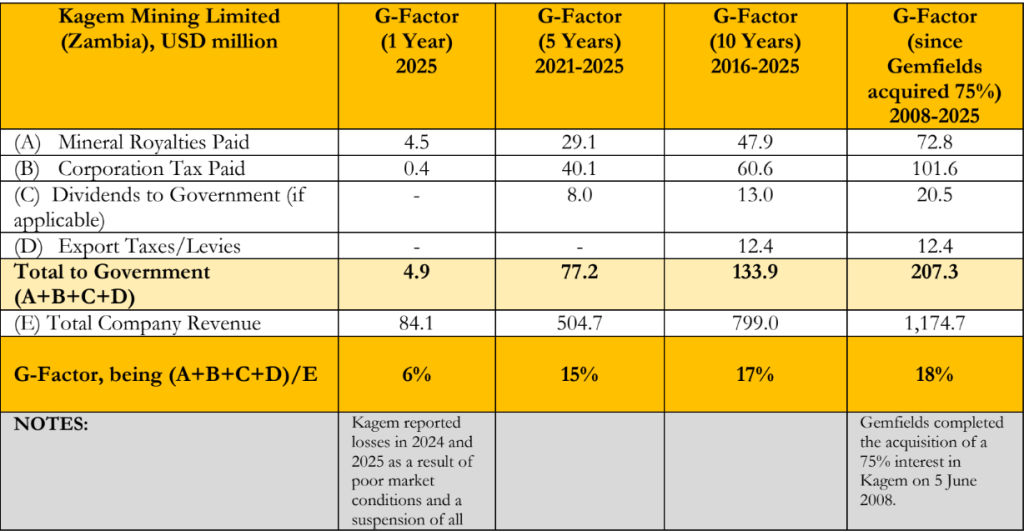
- Kagem (Zambia): 17% (10-year average), 6% for 2025
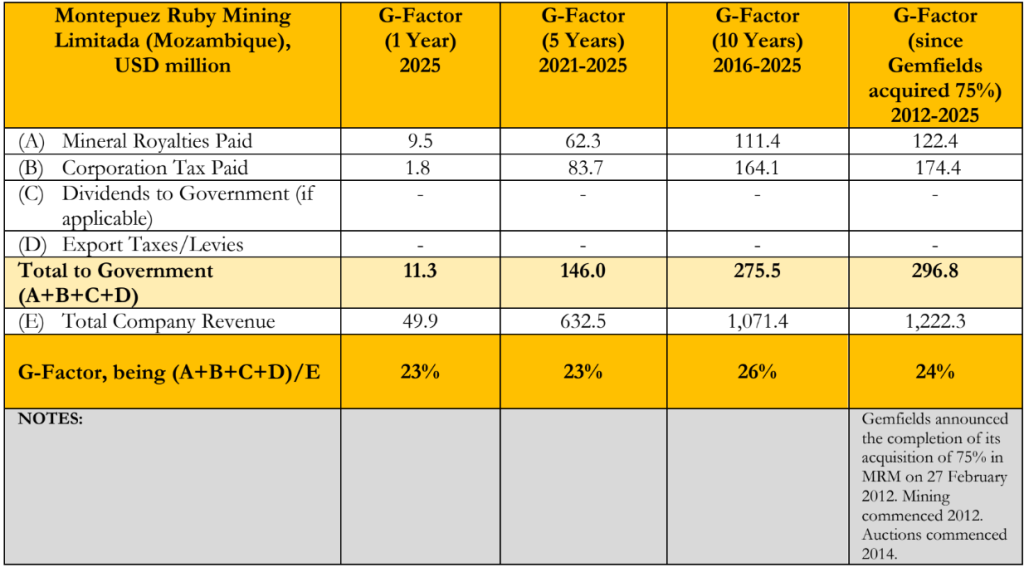
- Montepuez (Mozambique): 26% (10-year average), 23% for 2025
- Metric reflects revenue shared with host governments
- Demonstrates transparency in natural resource wealth distribution
- Impacted by market conditions, operational pauses, and taxation policies
Gemfields releases updated ‘G-Factor for Natural Resources’ figures to 31 December 2025
Gemfields is pleased to confirm that the Kagem emerald mine in Zambia recorded a ‘G-Factor for Natural Resources’ figure of 17%, while Montepuez Ruby Mining in Mozambique recorded 26%. These figures cover the 10-year period from 2016 to 2025. The ‘G-Factor for Natural Resources’ reveals the percentage of natural resource revenue that companies pay to the host country’s government through mineral royalties, corporation tax and, where the government is a shareholder, dividends.
Transparency and Accountability Through G-Factor
First announced in 2021, Gemfields shares its ‘G-Factor for Natural Resources’ annually in an effort to promote greater transparency and accountability regarding the level of natural resource wealth shared with the host country’s government, whether that value originates from the mining, oil, gas, timber or fishing sectors. It is also an indicator of the efficiency of natural resources companies in converting those natural resources into funds for the host government.
CEO Commentary on 2025 Performance
Gemfields’ CEO, Sean Gilbertson, said:
“Gemfields’ 2025 G-Factor for Natural Resources underscores how contributions to host nations vary with market and operating conditions.
In Mozambique, Montepuez Ruby Mining paid 23% of its revenue to the Government of Mozambique in 2025. Although total cash payments were lower than in prior years – reflecting reduced premium-ruby output, the postponed December ruby auction and illegal-mining intrusions – the proportional fiscal contribution remained strong.
At Kagem in Zambia, the one-year G-Factor for Natural Resources was just 6% for 2025, far below its long-term average. This reflects the halt in mining operations at Kagem from January through April 2025 due to competitor actions in the market and the temporary 15% export tax on precious gemstones. The government lifted the export tax by March 2025.
With operations restarted and market conditions improving, we expect Kagem’s G-Factor to trend back toward its long-term average of around 18%.
We remain committed to the transparency provided by the G-Factor for Natural Resources and continue to encourage broader industry adoption so that host governments and their citizens can better assess the stewardship of their resources.”
G-Factor Computation Overview
The following table presents the G-Factor for Natural Resources computations for Gemfields’ two key mining subsidiaries: the Kagem emerald mine in Zambia and Montepuez Ruby Mining in Mozambique:

Understanding the G-Factor Framework
The ‘G-Factor for Natural Resources’
Each standalone company engaged primarily in the extraction and sale of natural resources would typically calculate the G-Factor for Natural Resources, whether it operates in the mining, oil, gas, timber or fishing sectors. Accordingly, multi-national natural resource companies would publish the G-Factor for Natural Resources for each operating subsidiary engaged primarily in the extraction and sale of natural resources.
The G-Factor for Natural Resources is expressed as a percentage and is calculated as:
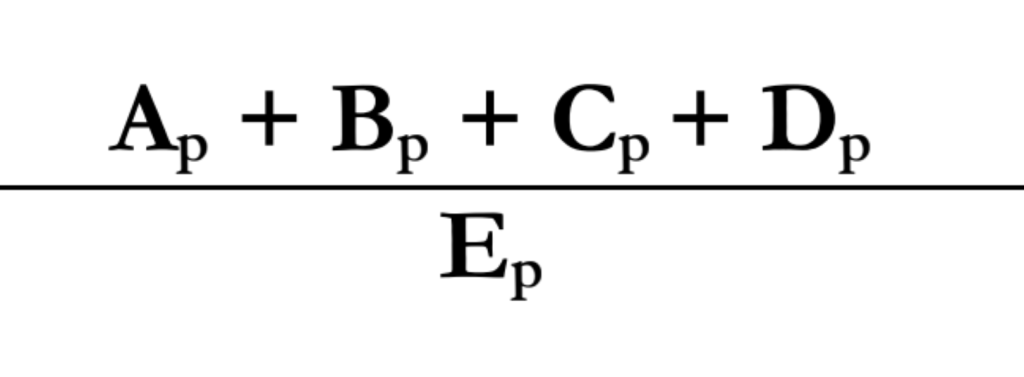
where:
A = the total mineral royalty (tax on revenue) paid by the reporting company to the host country government during the period
B = the total corporation tax (tax on profit) paid by the reporting company to the host country government during the period
C = the dividends paid by the reporting company to the host country government during the period (where the host country government is a shareholder in the reporting company)
D = the total export taxes or export levies paid by the reporting company to the host country government during the period
E = the total revenues of the reporting company during the period
p = the relevant period, typically calculated for each of (i) the prior year; (ii) the preceding 5 years and (iii) the preceding 10 years
The sums actually paid during the period (rather than the sums accrued or falling due during the period) are used for the purposes of A, B, C and D.
Limitations of the G-Factor Metric
No measure of this type is perfect and it is recognised that:
a. the G-Factor for Natural Resources is a “rule-of-thumb” – while it has broad application and is a practical indicator, it is not suited to every situation;
b. The G-Factor for Natural Resources does not include numerous additional and indirect taxes that further increase the contribution natural resource companies make to host nations. These taxes include, but are not limited to, area or surface charges, social security contributions, taxes on employee salaries, import and export duties, VAT and others.
c. the variety and variations in natural resource deposits, types and occurrences lessens the ability to make direct comparisons between companies.
FAQ
What is the G-Factor for Natural Resources?
It is a metric that shows the percentage of a company’s revenue paid to host governments through taxes, royalties, and dividends.
Why does Gemfields publish the G-Factor?
To promote transparency and accountability in how natural resource revenues are shared with host nations.
What were the 2025 G-Factor figures?
Montepuez Ruby Mining reported 23% for 2025, while Kagem reported 6% due to operational disruptions.
Why was Kagem’s G-Factor lower in 2025?
Due to a temporary halt in mining operations and export tax challenges during the year.
What does the G-Factor include?
Mineral royalties, corporation tax, dividends (if applicable), and export levies.
Is the G-Factor a perfect measure?
No, it is a practical indicator but does not include all indirect taxes and varies across different operations.
Source: SVAR Media Network
About SVAR Media Network – India’s Best Source for Jewellery News, Magazines, Newsletters and Media
India’s Leading Jewellery Media Network
SVAR Media Network is India’s No. 1 Destination for Jewellery News, setting the gold standard in timely, trusted and trend-driven coverage across the Gems & Jewellery industry.
Innovation in Jewellery Media
Recognized as Asia’s one of the Best Media in Jewellery & one of the World’s Best Jewellery Media, SVAR Media Network sets unparalleled standards in the Gems & Jewellery industry.
What SVAR Media Network Offers
Renowned as India’s Best Jewellery Magazine & Leading Jewellery Media, SVAR blends legacy with cutting-edge innovation by delivering:
• Best-in-class Jewellery Magazine
• AI-Powered Jewellery News via SVARA AI
• Gems & Jewellery Podcasts
• Digital Newsletters
• ISO 9001:2015 Certification
• Meta Verified Jewellery Media Brand

Why Industry Professionals Trust SVAR
Ranked #1 among the Top 5 Gems & Jewellery News Websites, Top 10 Jewellery Magazines in India, and the Most Influential Jewellery Media Brands, SVAR Media Network is the trusted source for accurate, fast and future-focused jewellery news.
Comprehensive Media Services
SVAR Media Network offers a diverse range of services including Monthly Magazines, Digital Newsletters, AI-Driven News Bulletins, Social Media Promotions, Website Blogs & Articles, WhatsApp Updates, Podcasts and more.
Explore the World of Gems & Jewellery with SVAR Media Network — Your Best Source for Trusted, Trend-Setting Jewellery News & Mediapp Updates, Podcasts & more…