
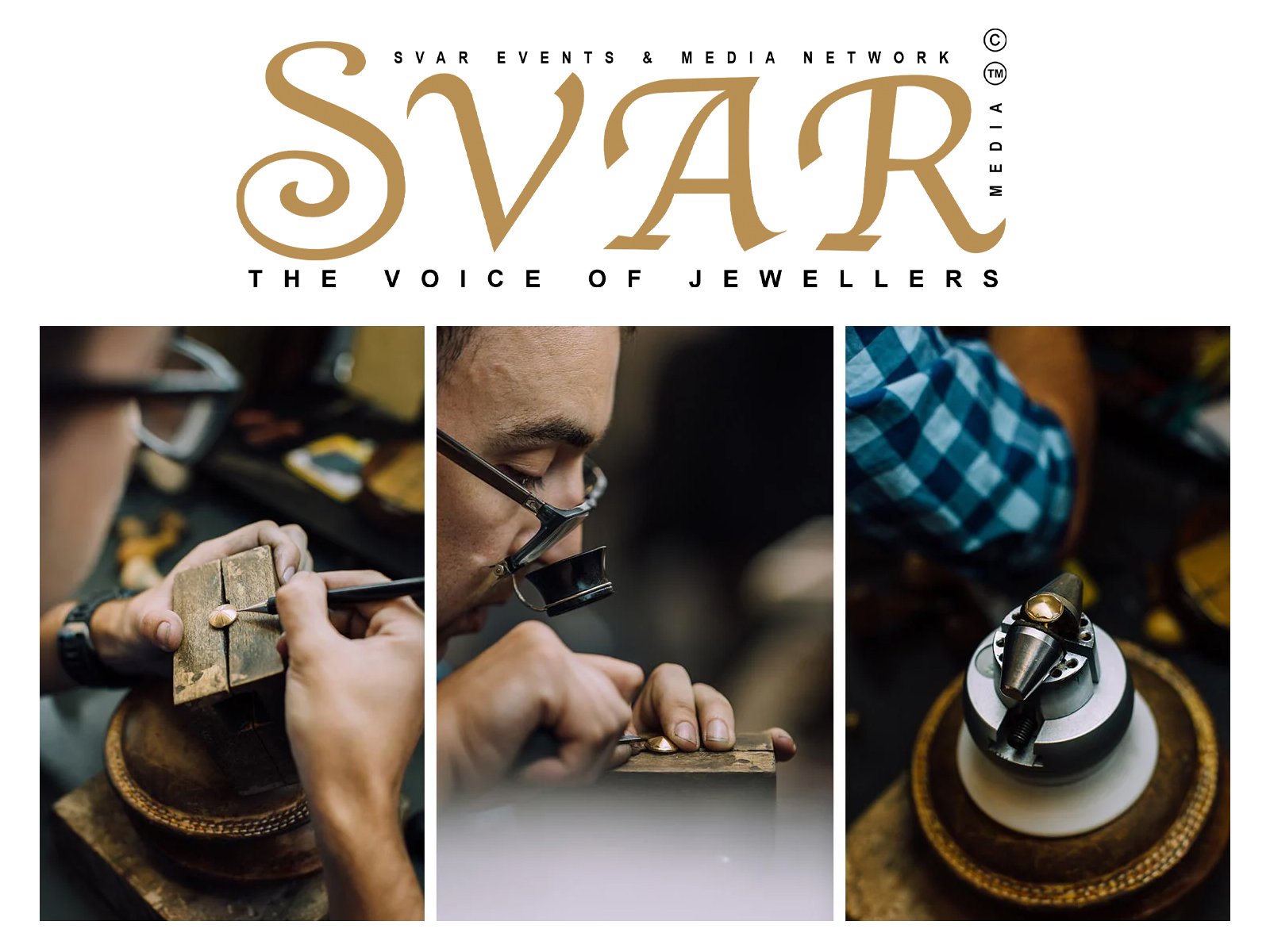
There was a time when jewellery wasn’t just worn, it was read. Every curve told a story. Every groove carried emotion. Each pattern was carved with intention, guided by a pair of human hands that understood patience and poetry.
But today, that language is fading.
Hand engraving, once the heartbeat of fine jewellery, has become one of the world’s most endangered crafts. Machines are faster. Mass production is cheaper. Digital engraving is sharper and more efficient. And in this relentless race for precision, one of jewellery’s most soulful art forms is quietly slipping into the shadows.
This is the story of a craft fighting for its life.
What Makes Hand-Engraving Irreplaceable?
Hand-engraving isn’t just a technique — it’s an interpretation. An engraver doesn’t simply cut into metal; they translate emotion into line work.
A master engraver brings:
- Pressure control
- Rhythm
- Depth variation
- Intuitive artistry
- Personal style
These are qualities that no machine can truly mimic. When you hold a hand-engraved piece, you don’t see sterile perfection. You see traces of humanity — tiny tremors, subtle asymmetry, the warmth of a human touch. It feels alive.
Why Hand Engraving Jewellery Is Disappearing
Its decline wasn’t sudden; it crept in quietly, almost invisibly.
Physical Strain
The craft is punishing. Hours spent under magnification take a toll on the eyes, shoulders, and wrists. Fewer young artisans are willing to endure that kind of discipline.
Speed Over Soul
Modern jewellery production revolves around efficiency. Hand-engraving is slow, demanding, and beautifully unpredictable. Laser engraving, on the other hand, is quick, consistent, and cheap.
Lack of Apprenticeship
For centuries, engraving skills were passed from master to apprentice through years of close mentorship. But those benches now sit empty. The masters are retiring, and their students are few and far between.
High Cost, Low Demand
Hand-engraving can cost ten times more than machine work. While connoisseurs appreciate it, the mass market rarely understands what makes it special.
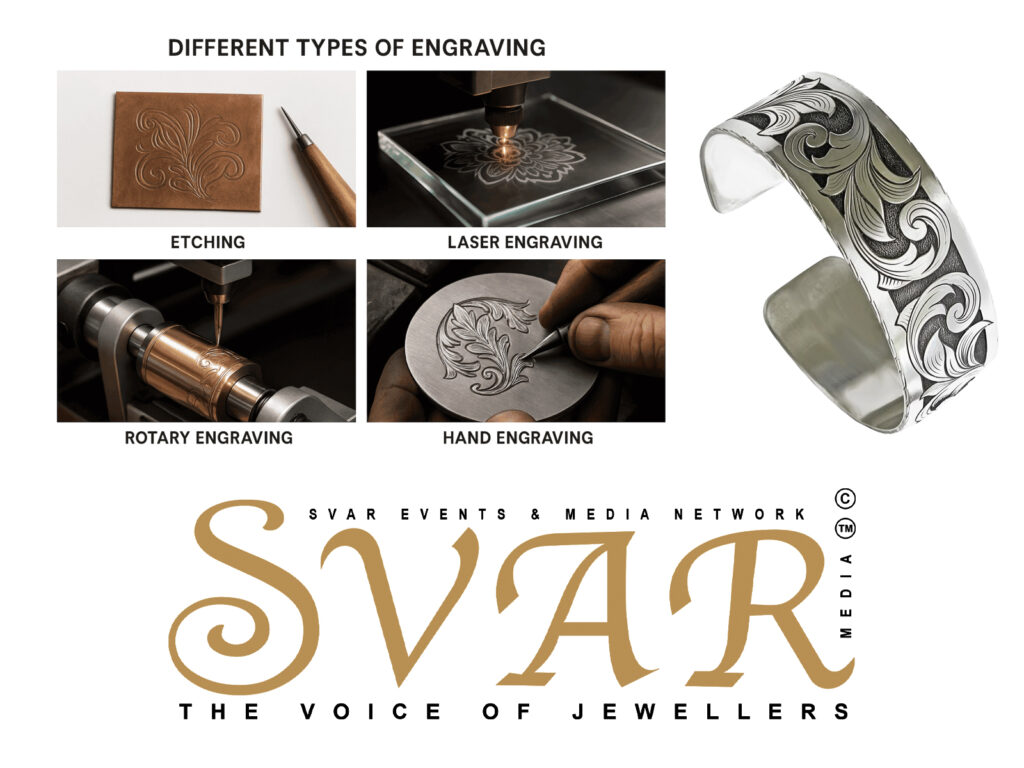
Inside the Life of a Hand-Engraver
Picture this:
A quiet workshop. A single lamp glowed over a worn wooden bench. A steel burin, warmed by endless hours of use. The faint, rhythmic scratch of metal against metal, a sound that demands stillness.
Hand-engravers enter a kind of meditative state. One misplaced stroke can ruin the piece. One tremor becomes a permanent line. They breathe through each movement, carving millimetre by millimetre until the metal comes alive. No two creations ever look alike. Each bears the artist’s unique rhythm, a fingerprint in metal.
The Cultural Value We Lose When Hand Engraving Jewellery Fades
When hand-engraving fades, it’s not just a skill that vanishes. It’s a piece of human history.
We lose:
- Generations of craftsmanship
- Cultural motifs passed down like heirlooms
- Distinct regional engraving styles — Persian, Rajasthani, Italian, Victorian
- The emotional resonance that only a handmade detail can evoke
It’s as though we’re erasing an entire chapter of jewellery’s story.
5. Mixed Metals & Layering — Modern Texture Play
The old rule of never mixing metals officially became obsolete in 2025. Designers and stylists embraced the freedom to combine yellow, white, and rose gold within the same look, creating layers rich with texture and personality. Chunky and fine chains were intertwined, polished finishes paired with brushed, and contrasting tones brought dimension to even the simplest outfit. The result was effortless sophistication, curated, modern, and distinctly individual. Fashion editors praised this approach as the perfect way to balance statement luxury with everyday versatility.
6. Sustainable & Ethical Signals — Traceability Sells
Sustainability took centre stage in 2025, but the conversation evolved beyond mere buzzwords. Discerning buyers, particularly affluent millennials and Gen Z consumers, demanded transparency about where their gold came from and how it was sourced. In response, luxury brands launched recycled-metal collections, published provenance reports, and introduced traceable sourcing certifications. Provenance became more than a checkbox; it became part of the story. For the new generation of collectors, a piece’s ethical integrity now holds as much weight as its aesthetic value.
Why Collectors Still Chase Hand Engraving Jewellery
When hand-engraving fades, it’s not just a skill that vanishes. It’s a piece of human history.
We lose:
Generations of craftsmanship
Cultural motifs passed down like heirlooms
Distinct regional engraving styles — Persian, Rajasthani, Italian, Victorian
The emotional resonance that only a handmade detail can evoke
It’s as though we’re erasing an entire chapter of jewellery’s story.
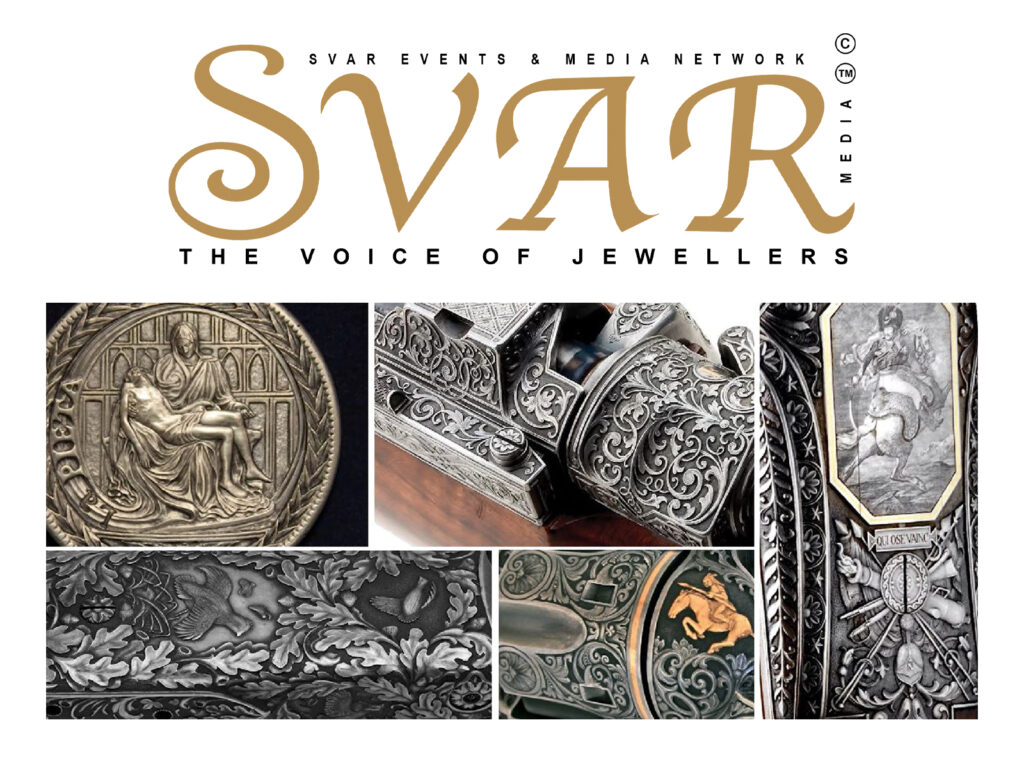
Why Collectors Still Chase Hand Engraving Jewellery
- Ironically, as the craft declines, its desirability soars. Collectors cherish hand-engraving for three simple reasons:
- Scarcity
Each year, there are fewer artisans capable of doing it. Rarity breeds value. - Artistic Identity
A hand-engraved piece isn’t just an object — it’s the sum of an artist’s time, focus, and emotion. - Timeless Value
Unlike machine-made work, hand-engraved jewellery grows richer with age. It develops character — a patina that tells its own story. For true connoisseurs, it’s one of the last surviving “human” signatures in modern jewellery.
Can the Craft of Hand Engraving Jewellery Be Saved?
Yes, but only if the industry decides it’s worth saving. Here’s what must change:
Blend old and new — merge traditional handwork with modern design to appeal to younger buyers seeking meaning in what they wear.
Invest in training — revive apprenticeships, support craft schools, and give young artisans a reason to learn.
Fair pricing — engravers should be treated and paid as artists, not technicians.
Better storytelling — show the faces behind the work; explain the hours, the difficulty, the devotion.
Final Reflection: A Craft Worth Fighting For
Hand-engraving isn’t fading because it has lost relevance. It’s fading because it has lost visibility. Behind every engraved flourish lies discipline, heritage, and a rare kind of quiet devotion. The kind that can’t be automated or mass-produced.
If the jewellery world wants to preserve its soul, not just its sparkle, then protecting hand-engraving isn’t optional. It’s vital. Because long after trends pass and technologies change, the most treasured pieces will still be the ones touched quite literally by human hands.