

How Gemstones Form: From Earth’s Depths to Your Jewellery Box
All gemstones have a history going back far before they arrive in a piece of jewellery, such as a ring, pendant, or bracelet. The sparkle that we relish in jewellery is the result of millions of years of geologic history in which pressure and heat are augmented by mineral chemistry in order to form nature’s best jewels. An understanding of how gemstones are formed not only renders them more gorgeous but also provides one with greater admiration for fine jewellery’s craftsmanship.
The Birth of Gemstones
Deep inside the Earth’s mantle and crust, under crushing pressure and searing heat, minerals slowly crystallise over thousands—or even millions—of years. This hidden process creates the gemstones we cherish today. Depending on the environment, their journeys differ:
Hydrothermal Formation: Hot, mineral-rich water or gases seep through cracks in rock, leaving behind crystals such as Topaz, Aquamarine, and Quartz as they cool.
Igneous Formation: When magma cools deep underground, minerals harden into crystals. Emeralds and Garnets often come to life this way.
Metamorphic Formation: Rocks that endure intense heat and pressure undergo transformations, giving us treasures like Sapphires, Rubies, and Spinels.
Sedimentary Formation: Over time, minerals settle in rivers, lakes, or seas, layering themselves into Opals and Turquoise.
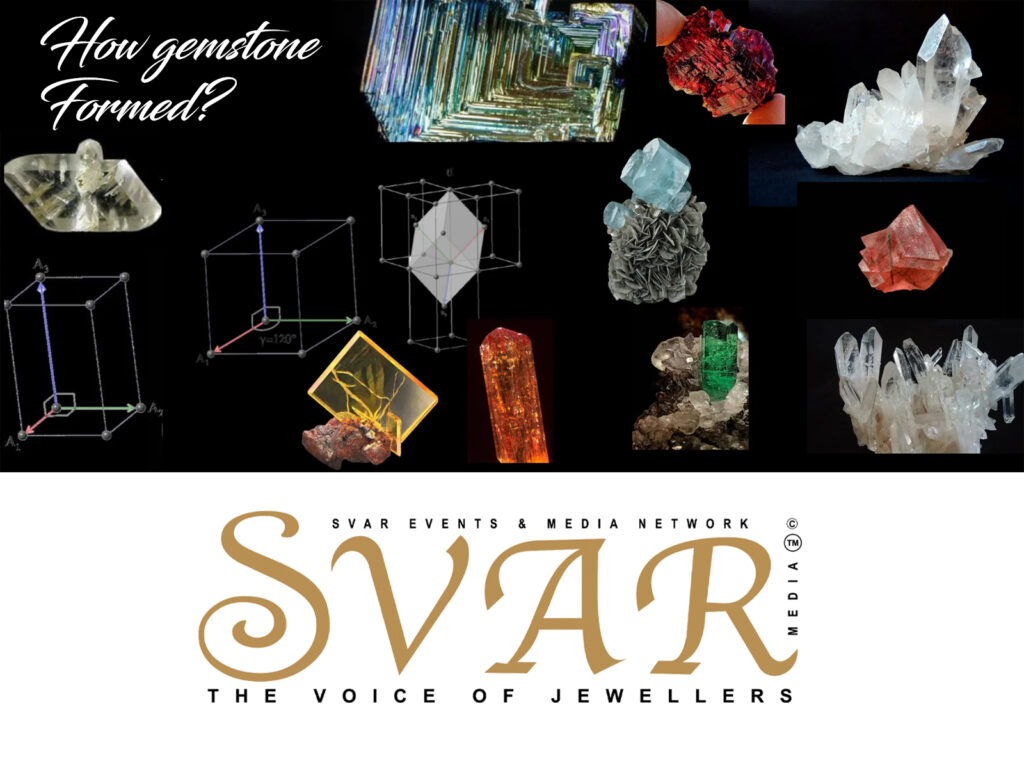
What Shapes Their Beauty?
A gemstone’s colour and sparkle are far from random—they’re written into its very structure:
Inclusions: Tiny bubbles or flecks inside the stone may lower clarity but often add character and authenticity.
Chromophores: Trace elements like chromium, iron, or manganese paint gemstones with vivid hues. For example, chromium gives emeralds their lush green, while iron brings out sapphire’s deep blues.
Crystal Structure: The way atoms are arranged dictates brilliance and transparency.
From Earth to Jewellery
Once formed, gemstones remain buried until discovered. Their journey from underground crystal to sparkling adornment is remarkable:
- Mining: Extracted through open-pit, alluvial, or underground methods, depending on where they lie.
- Sorting & Grading: Experts assess raw stones for size, colour, and clarity using magnification and precise tools.
- Cutting & Polishing: Gem cutters shape them into faceted or smooth cabochons, coaxing out brilliance and fire.
- Setting: Finally, they are placed into rings, earrings, pendants, or bespoke creations where both craftsmanship and natural beauty shine together.
Today’s Jewellery Landscape
Modern buyers are drawn not only to beauty but also to the story behind each gemstone:
- Sustainability: Many choose ethically sourced or lab-grown stones, which replicate natural processes while reducing environmental impact.
- Collectibility: Ultra-rare gems like Red Beryl or Zektserite captivate collectors thanks to their scarcity.
Educational Appeal: The more we know about formation, the more we appreciate the artistry in cut, colour, and clarity—helping us make thoughtful choices for investment or heirloom pieces.