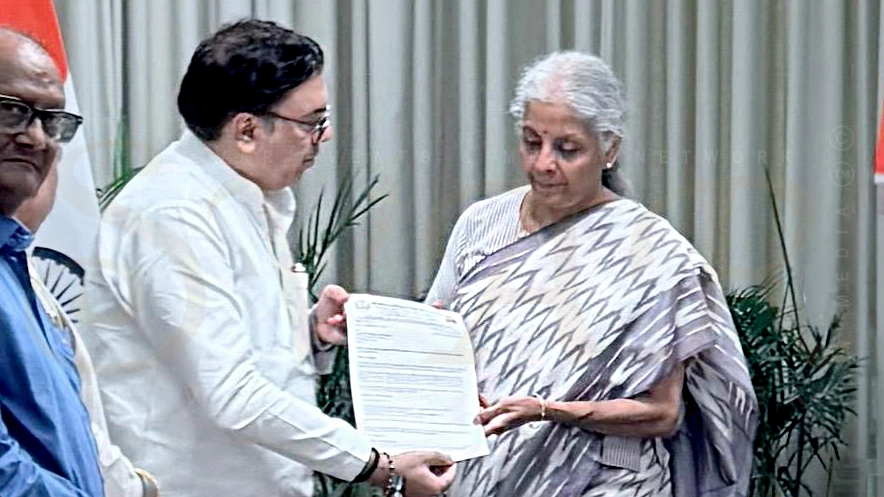
AIJGF President Mr Pankaj Arora submitted three separate representations to Union Finance Minister Mrs Nirmala Sitharaman covering practical difficulties in high-value digital payments and banking procedures, a proposed National Model Policy and Uniform Regulatory Framework for money-lending and pledge-based lending, and concerns regarding differential pricing of legally sourced and illegally sourced gold.
Quick Summary
- AIJGF President Mr Pankaj Arora submitted three representations addressed to Finance Minister Nirmala Sitharaman.
- The first representation focuses on high-value digital payments and banking procedures.
- AIJGF proposed reducing the NEFT/RTGS beneficiary activation period to a maximum of 30 minutes, wherever feasible and subject to appropriate banking safeguards.
- The second representation seeks a National Model Policy and Uniform Regulatory Framework for transparent, digital and licensed money-lending and pledge loan services.
- The third representation addresses differential gold pricing and illegal gold smuggling and its potential impact on law-abiding jewellers and bullion traders.
- On September 30, a separate delegation of around 20 senior trade leaders met Finance Minister Nirmala Sitharaman regarding the proposed 0.40 percent MDR on UPI transactions above ₹2,000.
- AICPDF and AIMRA subsequently decided to withdraw their proposed “No UPI Day” call for October 2, 2026.
Representations cover digital payments, lending regulation and gold smuggling
AIJGF President Mr Pankaj Arora, who is also National Joint Secretary General of the Confederation of All India Traders (CAIT), submitted three representations addressed to Union Finance Minister Mrs Nirmala Sitharaman. The representations were signed by Mr Arora in his capacity as National President of the All India Jewellers & Goldsmith Federation (AIJGF) and National Joint Secretary General, CAIT.
The three representations address practical difficulties in high-value digital payments and banking procedures, the need for a National Model Policy and Uniform Regulatory Framework for transparent, digital and licensed money-lending and pledge loan services, and concerns relating to differential pricing between legally sourced gold and gold entering India through illegal channels.
Representation on Digital Payments and Banking Procedures
AIJGF highlights difficulties in high-value digital transactions
The first representation concerns the practical difficulties faced by traders and consumers across the country in making high-value digital payments.
The representation acknowledges the role of the Government of India’s Digital India initiative in promoting transparency, efficiency and digital transactions in the Indian economy. It states that certain existing technical and banking limitations are creating practical difficulties, particularly in sectors involving high-value retail transactions such as jewellery, furniture, tiles, marble, branded apparel, home appliances, fitness equipment and other premium goods.
Limitation on Cash Transactions
The representation states that under existing provisions, cash receipts of ₹2 lakh or more in certain transactions are restricted. It states that this makes efficient digital payment facilities particularly important for high-value purchases.
UPI Transaction Limits
AIJGF also raises the issue of UPI transaction limits prescribed by individual banks.
According to the representation, these limits may restrict the amount that can be paid digitally within a given period and can create difficulties when the value of a purchase is substantially higher than the applicable transaction limit.
Delay in Activation of New Beneficiaries
The representation also highlights delays that can arise when customers make high-value payments through NEFT/RTGS from savings accounts.
When a customer adds a merchant as a new beneficiary, a waiting period may be imposed by the customer’s bank before the beneficiary becomes active. The representation states that, in practical situations, this delay can prevent the customer from completing a purchase on the same day.
Impact on Traders and Consumers
AIJGF states that a customer travelling from another city or market to purchase jewellery or other high-value goods may be unable to complete the transaction immediately because of these payment-related restrictions.
The representation states that it may be impractical for such a customer to return to the same establishment the following day merely to complete the payment. It notes that the merchant may consequently lose a sale, while the customer faces inconvenience despite having sufficient funds in their bank account.
Proposal for a Maximum 30-Minute Activation Period
AIJGF has requested the Government, in consultation with the Reserve Bank of India (RBI) and concerned banking authorities, to examine the possibility of introducing a more convenient mechanism for high-value digital payments.
The representation specifically requests that the beneficiary activation period for NEFT/RTGS should, wherever feasible and subject to appropriate banking safeguards, be reduced to a maximum of 30 minutes, with appropriate arrangements to facilitate high-value payments without unnecessarily restrictive transaction ceilings.
The representation further states that a secure and technology-driven mechanism could simultaneously ensure customer protection, fraud prevention and compliance while enabling genuine customers to complete legitimate high-value purchases without avoidable delays.
Representation Seeking a National Model Policy for Money-Lending and Pledge-Based Lending
Proposed framework for transparent and licensed lending
The second representation seeks a National Model Policy and Uniform Regulatory Framework for Transparent, Digital and Licensed Money-Lending & Pledge Loan Services in India.
AIJGF states that it represents jewellers, goldsmiths, pledge businesses and micro-enterprises across the country and seeks to contribute to financial inclusion, rural economic activity and a transparent financial ecosystem.
The representation notes that local money-lending and pledge-based credit arrangements have historically provided financial assistance, particularly in rural areas and smaller towns where access to formal banking facilities may be limited or institutional credit may take longer.
Different State-Level Regulatory Frameworks
AIJGF highlights that different states currently have different laws and regulatory frameworks governing money-lending and pledge-based lending activities.
The representation states that licensing procedures, eligibility requirements, interest-rate provisions, record-keeping requirements, inspections and compliance mechanisms vary from state to state. It proposes the development of a National Model Policy / Model Regulatory Framework, in consultation with state governments.
The representation also clarifies that the proposal is not intended to interfere with the functioning or jurisdiction of banks, cooperative institutions or NBFCs regulated by the Reserve Bank of India. Instead, it seeks to modernise and strengthen the framework applicable to legitimate local lenders operating under state laws.
Proposed Minimum Regulatory Standards
AIJGF’s proposed framework includes minimum regulatory standards covering eligibility and licensing requirements, customer protection, transparency of interest rates and charges, standardised loan documentation, digital record maintenance, grievance redressal, and inspection and compliance mechanisms.
The representation also proposes a digital compliance framework involving digital loan registers, digital receipts and transaction records, documented customer consent, secure record preservation and digital audit trails.
Customer Protection and Digital Licence Verification
The federation proposes that licensed lenders should clearly provide loan terms and conditions in writing and transparently disclose interest rates and applicable charges.
The representation also calls for measures to prevent undisclosed or hidden charges, ensure the secure maintenance of pledged assets and prevent coercive or unfair practices beyond what is permitted by law.
Another proposal is a digital licence verification mechanism through which citizens could independently check a lender’s licence number, licence validity and current licensing status.
AIJGF has also proposed an effective state-level grievance redressal mechanism and transparent inspection and compliance procedures.
Coordination Between Central and State Governments
The representation proposes continued consultation between the Central and State Governments to develop a cooperative federal approach.
AIJGF has also requested high-level consultation with concerned ministries, departments and state governments, along with consideration of an expert committee or working group comprising representatives from concerned ministries and departments, state governments, legal experts, financial experts and relevant industry organisations.
The representation identifies potential outcomes including improved access to regulated credit in rural and remote areas, greater financial inclusion, stronger control over unlicensed lending, improved transparency through digital records, stronger customer protection, greater formalisation of eligible small businesses and improved regulatory oversight.
Representation on Differential Gold Pricing and Illegal Gold Smuggling
Focus on the Price Differential Between Legal and Illegal Gold
The third representation focuses on the differential pricing between legally sourced gold and gold entering the country through illegal channels, and its potential impact on law-abiding jewellers and bullion traders.
AIJGF states that applicable import duties and other taxes on legally imported gold can create a significant price difference compared with gold that enters India through illegal channels.
According to the representation, this price differential can create an economic incentive for illegal operators to smuggle gold into India. The representation refers to reported instances of gold being smuggled through airports, railways and road routes.
Impact on Compliant Jewellers and Bullion Traders
AIJGF highlights the position of jewellers and bullion traders who operate through the formal banking system, utilise banking facilities and credit limits, pay interest and other legitimate financial costs, comply with applicable import duties, GST, income tax and other statutory liabilities, and maintain proper books of accounts and regulatory compliance.
The representation states that such businesses may face a significant competitive disadvantage when illegally sourced gold becomes available at a lower effective cost.
It further states that the issue has implications beyond the jewellery trade, including potential implications for government revenue, formalisation of the gold market, organised trade and the banking system.
Five Recommendations Put Forward by AIJGF
AIJGF has proposed five key measures in the representation.
1. Review of Gold Import Duty
The federation has requested a review of the applicable gold import duty structure with the objective of reducing the economic incentive created by a significant price differential between legally imported and illegally sourced gold.
2. National Anti-Smuggling Reporting Mechanism
AIJGF has proposed a dedicated national toll-free helpline and secure online portal for reporting information regarding illegal gold smuggling and trading.
3. Confidentiality and Incentive for Genuine Information
The federation has suggested safeguards to maintain the confidentiality of genuine informants, along with a suitable incentive or reward mechanism subject to applicable law and verification procedures.
4. High-Level Joint Committee
AIJGF has proposed a joint high-level committee comprising representatives from the Ministry of Finance, CBIC/Customs, relevant enforcement agencies and representatives of the organised gold and jewellery industry.
5. Targeted Enforcement
The federation has called for identification of major sources, routes and markets associated with illegal gold movement through appropriate intelligence mechanisms, followed by focused enforcement action in accordance with law.
AIJGF’s Stated Objective
The representation clarifies that the federation’s objective is not to seek exemption from applicable taxes or duties.
Instead, AIJGF states that the objective is to seek a fair and level competitive environment for businesses that comply with statutory requirements.
UPI MDR Issue Raised During September 30 Trade Delegation Meeting
Senior Trade Leaders Meet Finance Minister
On September 30, 2026, a delegation of around 20 senior trade leaders from various states across the country, led by Mr Praveen Khandelwal, Member of Parliament from Chandni Chowk and National General Secretary of CAIT, met Union Finance Minister Mrs Nirmala Sitharaman at Kartavya Bhavan in New Delhi.
The delegation apprised the Finance Minister of the concerns of the trading community regarding the proposed 0.40 percent Merchant Discount Rate (MDR) on UPI transactions above ₹2,000.
The delegation included CAIT National President Mr. B. C. Bhartia, AICPDF President Mr. Dhairyashil Patil, AIMRA Chairman Mr. Kailash Lakhyani and AIJGF President Mr. Pankaj Arora, along with several prominent trade leaders representing various business sectors.
“No UPI Day” Call Withdrawn
Addressing the media, Mr Praveen Khandelwal said that following the positive and constructive discussion with the Finance Minister and her assurance that the concerns raised by trade organisations would be duly considered, AICPDF and AIMRA decided to withdraw the proposed call for a “No UPI Day” on October 2, 2026.
Concerns Over the Proposed MDR
Earlier, Mr Patil and Mr Lakhyani highlighted the potential economic impact of the proposed MDR, particularly on small and medium-sized traders.
They said that maintaining the momentum and popularity of digital payments was essential, while also ensuring that traders were not subjected to any additional financial burden.
Trade Bodies Reiterate Support for UPI
The Finance Minister listened to the delegation’s concerns and assured the representatives that the government was committed to promoting digital transactions while also protecting the interests of all stakeholders.
The delegation expressed its gratitude to the Finance Minister and the Ministry of Finance for engaging with trade organisations on the issue and adopting a positive approach.
During the meeting, the trade leaders reiterated their full support for the Digital India campaign and the success of UPI. They said that UPI had emerged as a successful and exemplary model of digital payments globally.
The trade organisations stated that their objective was not to oppose digital payments, but to ensure that policies relating to them were balanced, inclusive and in the interest of both consumers and traders.
The delegation expressed confidence that continued dialogue between the government and trade organisations would lead to a practical and sustainable solution that would further strengthen India’s digital economy while also protecting the interests of the country’s millions of traders and MSME enterprises.
Three Representations Address Distinct Industry Concerns
Digital payments, lending regulation and gold trade
The three representations submitted by AIJGF President Mr Pankaj Arora address three distinct areas.
The first representation focuses on practical difficulties in high-value digital payments and banking procedures and proposes measures including a maximum 30-minute NEFT/RTGS beneficiary activation period, wherever feasible and subject to appropriate safeguards.
The second representation seeks a National Model Policy and Uniform Regulatory Framework for transparent, digital and licensed money-lending and pledge loan services, covering licensing, customer protection, digital records, grievance redressal and regulatory compliance.
The third representation focuses on the differential pricing between legally sourced and illegally sourced gold and proposes measures including a review of gold import duty, a national reporting mechanism, protection for genuine informants, a high-level joint committee and targeted enforcement.
Separately, the September 30 trade delegation meeting addressed the proposed 0.40 percent MDR on UPI transactions above ₹2,000 and the proposed “No UPI Day”, which AICPDF and AIMRA subsequently decided to withdraw.
FAQs
Who submitted the three representations to Finance Minister Nirmala Sitharaman?
Mr Pankaj Arora, National President of the All India Jewellers & Goldsmith Federation (AIJGF) and National Joint Secretary General of the Confederation of All India Traders (CAIT), submitted the three representations.
What are the three representations about?
The representations cover high-value digital payments and banking procedures, a National Model Policy and Uniform Regulatory Framework for money-lending and pledge-based lending, and differential pricing of legally sourced and illegally sourced gold.
What did AIJGF propose regarding NEFT/RTGS payments?
AIJGF proposed that the beneficiary activation period for NEFT/RTGS should, wherever feasible and subject to appropriate banking safeguards, be reduced to a maximum of 30 minutes.
What does the proposed lending framework cover?
The proposed framework covers licensing, customer protection, transparency of interest rates and charges, standardised loan documentation, digital records, grievance redressal, inspection and compliance mechanisms.
What concerns did AIJGF raise regarding gold?
AIJGF raised concerns regarding the price differential between legally sourced gold and gold entering India through illegal channels and its potential impact on law-abiding jewellers and bullion traders.
What measures did AIJGF propose to address illegal gold smuggling?
The recommendations include reviewing gold import duty, establishing a national anti-smuggling reporting mechanism, maintaining confidentiality of genuine informants with an appropriate incentive mechanism, forming a high-level joint committee and undertaking targeted enforcement.
What was discussed during the September 30 trade delegation meeting?
The delegation raised concerns regarding the proposed 0.40 percent MDR on UPI transactions above ₹2,000 and discussed the potential impact on traders.
What happened to the proposed “No UPI Day”?
According to the statement provided, AICPDF and AIMRA decided to withdraw their proposed “No UPI Day” call for October 2, 2026, following the discussion with the Finance Minister and her assurance that the concerns raised by trade organisations would be duly considered.
Source: SVAR Media Network
About SVAR Media Network – India’s Best Source for Jewellery News, Magazines, Newsletters and Media
SVAR Media Network is India’s No. 1 Destination for Jewellery News, setting the gold standard in timely, trusted, & trend-driven coverage across the Gems & Jewellery industry. As the Most Followed Jewellery Magazine & Media House in India, SVAR delivers Daily Jewellery News India Updates, market insights, & global developments through its platforms like Jewellery Magazine, Newsletters, AI Powered News Bulletins, Website, Social Media, Podcasts, & much more.
Recognized as Asia’s one of the Best Media in Jewellery & one of the World’s Best Jewellery Media, SVAR Media Network sets Unparalleled Standards in the Gems & Jewellery industry. SVAR is the Most Trusted & Widely Read Voice in the Gems & Jewellery Community.
Renowned as India’s Best Jewellery Magazine & Leading Jewellery Media, SVAR blends legacy with cutting-edge innovation by delivering:
- Best in class Jewellery Magazine for the Gems & Jewellery Industry & Jewellery Enthusiasts
- Real-time AI-Powered Jewellery News via SVARA AI, the World’s First AI Anchor in Fashion, Gems & Jewellery Industry
- India’s One of the First Gems & Jewellery Podcasts
- Digital Jewellery Newsletters for professionals and enthusiasts
- ISO 9001:2015 Certification, the first in the jewellery-media sector, proving our commitment to excellence
- Asia’s First & World’s Second Meta Verified Jewellery Media Brand

Ranked #1 among the Top 5 Gems & Jewellery News Websites, Top 10 Jewellery Magazines in India, & Most Influential Jewellery Media Brands, SVAR Media Network is your Trusted Source for Accurate, Fast, & Future-Focused Jewellery News.
SVAR Media Network is India’s No 1 Digital Media in Jewellery Industry & continues to be the Leading Jewellery Magazine & a Global Leader in Jewellery Media. SVAR Media Network offers a diverse range of services, including: Monthly Magazines, Digital Newsletters, Al-Driven News Bulletins, Social Media Promotions, Website Blogs & Articles, WhatsApp Updates, Podcasts & more…
Whether you seek updates on New Launches, Trade Shows, Celebrity Campaigns, Trends or Market Movements, SVAR is the Authority in Jewellery News India & beyond.
Explore the World of Gems & Jewellery with SVAR Media Network — Your Best Source for Trusted, Trend-Setting Jewellery News & Media, Updates, Podcasts & more…